
Table of Contents
As an Amazon Associate, we earn from qualifying purchases. This means we may receive a small commission at no extra cost to you when you buy through links on this page.
What is Custom EQ and Why Does it Matter?
For years, wireless earbuds have offered preset EQ options – ‘Bass Boost’, ‘Treble Enhance’, ‘Vocal Focus’ – providing a limited degree of sound shaping. However, custom EQ, or equalisation, takes things to a whole new level. It allows you to precisely adjust specific frequency ranges within the audio spectrum, impacting everything from the thump of the bass to the clarity of vocals. Unlike presets, which are one-size-fits-all, custom EQ empowers you to sculpt the sound to *your* ears and *your* preferred music genres.
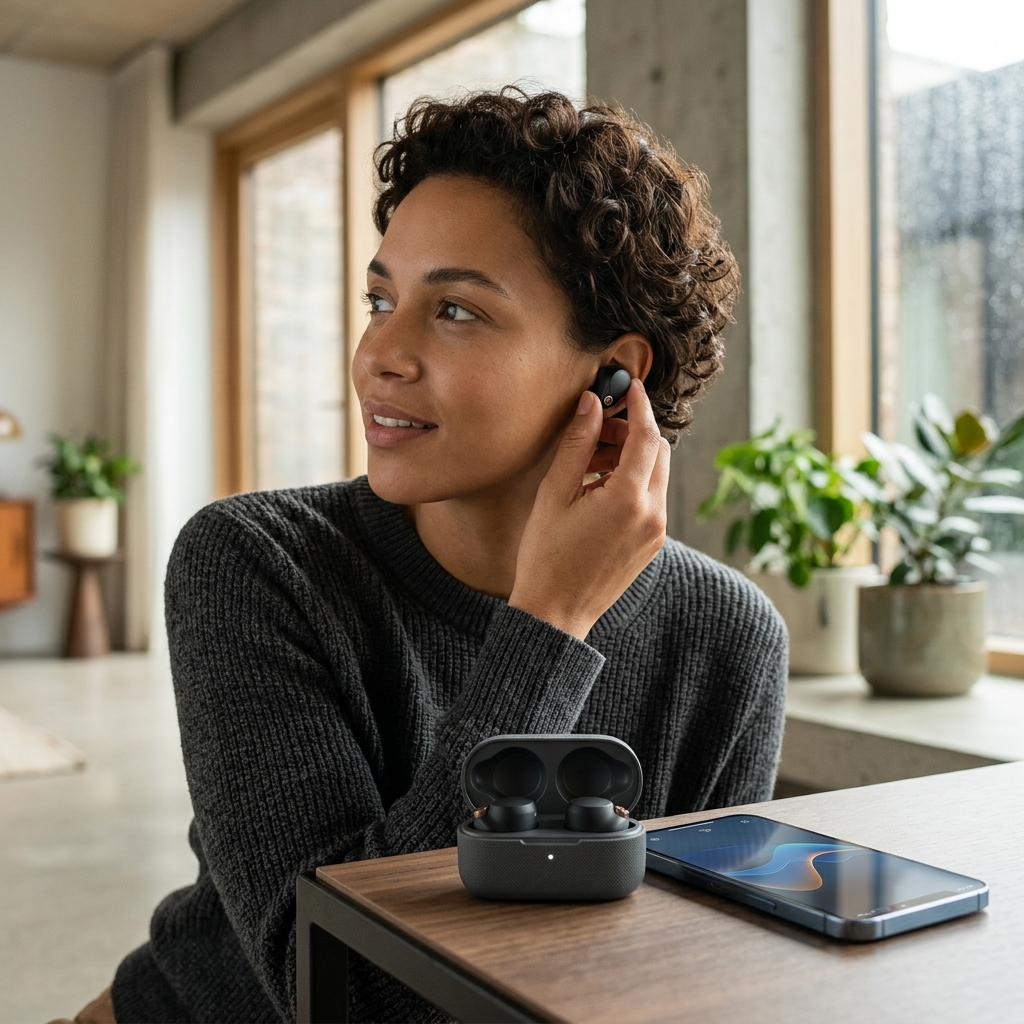
Why is this important? Our hearing isn’t uniform. Age, genetics, and even prolonged exposure to loud noises can affect how we perceive different frequencies. Furthermore, personal preference plays a huge role. What sounds ‘good’ is subjective. Custom EQ allows you to compensate for hearing deficiencies, highlight frequencies you enjoy, and create an audio experience perfectly tailored to your individual needs. Audiophiles will appreciate the granular control, but even casual listeners will notice a significant improvement in clarity, depth, and overall enjoyment when they fine-tune their sound.
Key Features to Look for in Wireless Earbuds with Custom EQ
While custom EQ is the star of the show, it’s not the only thing that matters. Here’s what else to consider when choosing wireless earbuds:
- Bluetooth Codec Support: Look for earbuds supporting aptX Adaptive or LDAC. These codecs offer higher bandwidth and lower latency, resulting in superior audio quality, especially with custom EQ adjustments. SBC is the baseline; AAC is acceptable for Apple devices.
- Active Noise Cancellation (ANC): Effective ANC is crucial for immersive listening, particularly in noisy environments. Consider how well the earbuds block out different types of sounds (low-frequency rumble, human speech).
- Battery Life: Aim for at least 6-8 hours of playback on a single charge, with the charging case providing additional charges.
- IP Rating: An IPX4 or higher rating indicates water and sweat resistance, making the earbuds suitable for workouts.
- Comfort & Fit: Ergonomics are vital. Earbuds should feel secure and comfortable even during prolonged use. Multiple ear tip sizes are essential.
- Microphone Quality: Clear voice transmission is important for calls. Consider earbuds with noise reduction technology for microphones.
Top Wireless Earbuds with Custom EQ – Our 2026 Picks
1. Sony WF-1000XM6 (GBP 279)
Sony continues to dominate with the WF-1000XM6. The ANC remains industry-leading, and the sound quality is superb, even more so with the highly detailed custom EQ in the Sony Headphones Connect app. The app allows for incredibly precise adjustments and even offers automatic EQ based on your hearing profile (a 2026 addition!).
| Pros | Cons |
|---|---|
| Exceptional ANC | Pricey |
| Detailed and balanced sound | App can be overwhelming for beginners |
| Excellent Custom EQ with auto-EQ | Case is slightly bulky |
2. Bose QuietComfort Earbuds III (GBP 259)
Bose’s focus on comfort and noise cancellation shines through in the QuietComfort Earbuds III. The custom EQ, accessible through the Bose Music app, is more streamlined than Sony’s but still offers significant control. Bass response is particularly strong and tunable.
| Pros | Cons |
|---|---|
| Unrivalled comfort | EQ less granular than Sony |
| Top-tier noise cancellation | Design is less modern |
| Strong bass performance | Battery life slightly below average |
3. Sennheiser Momentum True Wireless 4 (GBP 249)
Sennheiser delivers audiophile-grade sound in a compact package. The Momentum True Wireless 4 boasts excellent clarity and detail, and the Smart Control app offers a robust custom EQ with pre-set curves as a starting point. Supports aptX Adaptive for high-quality streaming.
| Pros | Cons |
|---|---|
| Outstanding sound quality | ANC not quite as strong as Sony/Bose |
| Excellent custom EQ options | App can be buggy at times |
| Sleek, minimalist design | Pricey for the features |
4. Jabra Elite 10 (GBP 229)
The Jabra Elite 10 strikes a good balance between price, performance, and features. The Sound+ app provides a comprehensive custom EQ, and the earbuds offer excellent call quality. They’re particularly suited for active lifestyles with their secure fit and IP57 rating.
| Pros | Cons |
|---|---|
| Excellent call quality | Sound quality not *quite* as refined as Sennheiser |
| Secure and comfortable fit | ANC could be improved |
| Robust custom EQ and IP57 rating | App interface feels dated |
5. Technics EAH-AZ80 (GBP 219)
Technics delivers a surprisingly strong contender with the EAH-AZ80. The sound is clear and balanced, and the custom EQ within the Technics Audio Connect app allows for precise adjustments. LDAC support ensures high-resolution audio streaming.
| Pros | Cons |
|---|---|
| Excellent sound quality with LDAC | Brand recognition lower than competitors |
| Effective noise cancellation | EQ app lacks advanced features |
| Comfortable and lightweight | Case feels a bit cheap |
6. OnePlus Buds 3 (GBP 149)
A fantastic mid-range option. The OnePlus Buds 3 offer surprisingly good sound quality and a decent custom EQ within the HeyMelody app. Great value for money, particularly for OnePlus smartphone users.
| Pros | Cons |
|---|---|
| Excellent value | Build quality feels less premium |
| Good sound quality for the price | EQ options less extensive than premium models |
| Fast pairing with OnePlus phones | ANC is basic |
7. Nothing Ear (a) (GBP 99)
The Nothing Ear (a) bring unique style and surprisingly good sound to the budget end of the market. The Nothing X app offers a basic but usable custom EQ. A great entry point for those wanting to experiment with sound shaping.
| Pros | Cons |
|---|---|
| Affordable price | Sound quality not as detailed as pricier options |
| Unique and stylish design | Limited EQ functionality |
| Decent battery life | ANC is minimal |
How to Use Custom EQ Effectively: A Step-by-Step Guide
Ready to dive in? Here’s how to get the most out of custom EQ:
- Start with a Flat EQ: Reset the EQ to its default flat setting. This provides a neutral baseline.
- Identify Problem Areas: Listen to a variety of music genres. Pay attention to areas that sound lacking or harsh. Is the bass muddy? Are the vocals muffled? Is the treble too piercing?
- Understand Frequency Ranges:
- 20-60 Hz: Sub-bass – the rumble you feel more than hear.
- 60-250 Hz: Bass – provides the foundation of the music.
- 250-500 Hz: Lower Midrange – affects warmth and clarity.
- 500 Hz – 2 kHz: Midrange – where vocals and many instruments reside.
- 2 kHz – 4 kHz: Upper Midrange – adds presence and detail.
- 4 kHz – 20 kHz: Treble – provides sparkle and airiness.
- Make Small Adjustments: Don’t make drastic changes. Increase or decrease frequencies by 1-2 dB at a time.
- Test and Iterate: Listen to the same music after each adjustment. Experiment and refine until you achieve the desired sound.
EQ App Deep Dive: Comparing the Best Earbud Companion Apps
Each brand approaches EQ differently. Here’s a comparison:
| App | Ease of Use | Control Level | Features |
|---|---|---|---|
| Sony Headphones Connect | Moderate – can be overwhelming | Very High – granular control, auto-EQ | Hearing profile analysis, 360 Reality Audio |
| Bose Music | Easy – streamlined interface | Medium – good control, but less granular | Preset EQ curves, adjustable noise cancellation |
| Sennheiser Smart Control | Moderate | High – detailed adjustments, preset curves | Sound Check (personalized sound profiles) |
| Jabra Sound+ | Moderate – slightly dated | High – comprehensive EQ settings | HearThrough (transparency mode), MySound (personalized hearing profile) |
| Nothing X | Easy | Basic – limited frequency bands | Minimalist design, fast pairing |
Troubleshooting Common EQ Issues
Experiencing problems? Here are some solutions:
- Distorted Audio: Reduce the gain on frequencies you’ve boosted. Overboosting can cause clipping.
- Muddy Bass: Lower frequencies around 250-500 Hz.
- Harsh Treble: Reduce frequencies above 8 kHz.
- Muffled Vocals: Boost frequencies around 1-3 kHz.
- Flat Sound: Experiment with subtle boosts in the bass and treble regions.
The Future of EQ in Wireless Earbuds
The future of EQ is exciting. We’re already seeing the emergence of AI-powered EQ that automatically adjusts the sound based on your listening environment. More sophisticated personalised hearing profiles, created through audiometric data gathered via in-ear sensors, will become commonplace. Integration with streaming services, allowing for EQ profiles tailored to specific albums or artists, is also on the horizon. Expect even more granular control and a truly personalised listening experience in the years to come.