
Table of Contents
As an Amazon Associate, we earn from qualifying purchases. This means we may receive a small commission at no extra cost to you when you buy through links on this page.
Understanding Your Headphones & Sound Quality
In 2026, headphone technology continues to advance, but understanding the fundamentals remains crucial for optimising your listening experience. Headphones come in various types, each with its own sonic characteristics. Wired headphones offer a direct connection, generally resulting in higher fidelity, while wireless headphones provide convenience and freedom. Noise-cancelling headphones, like the Sony WH-1000XM6 Headphones (£349.99), excel at blocking out external sounds, but can sometimes subtly alter the audio signature. Open-back headphones offer a wider soundstage but leak sound, making them unsuitable for public spaces. Closed-back headphones provide better isolation but can sound more contained.
Key Audio Concepts
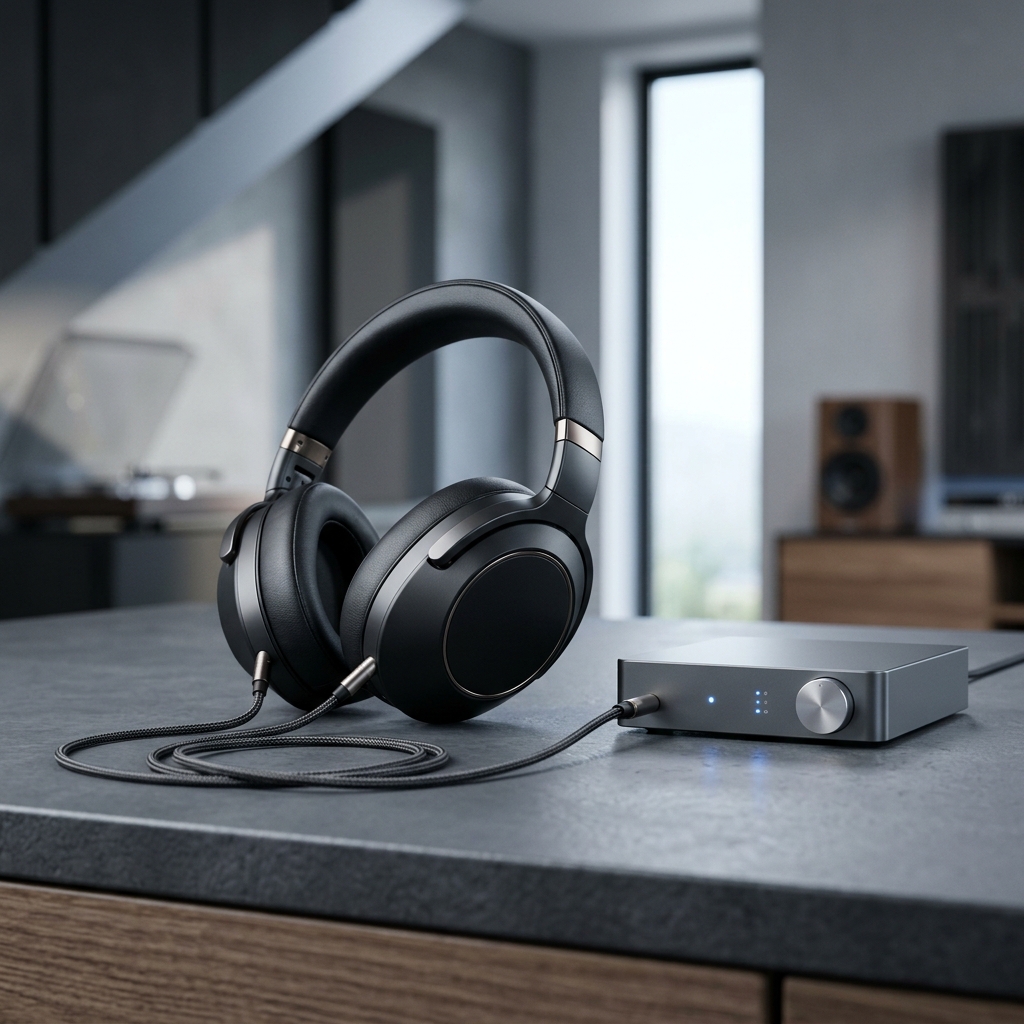
Several factors influence sound quality. Frequency response describes the range of frequencies a headphone can reproduce (measured in Hz). A wider range generally means a more complete sound. Impedance (measured in ohms) determines how much power a headphone needs to drive effectively; higher impedance headphones often benefit from a dedicated amplifier. Finally, drivers – the components that produce sound – play a vital role. Different driver technologies (dynamic, planar magnetic, electrostatic) offer varying levels of detail and accuracy.
The Source Matters: Optimising Your Audio Source
Even the best headphones can’t compensate for a poor audio source. Streaming services have significantly improved in quality, but compression still impacts the sound. Lossless audio formats like FLAC and ALAC retain all the original audio data, delivering superior clarity compared to compressed formats like MP3 and AAC. In 2026, many streaming services now offer Hi-Res Lossless tiers, providing noticeably improved audio quality, often for an additional monthly fee.
Here’s a comparison of common audio formats:
| Format | Compression | Typical Bitrate | Quality | File Size |
|---|---|---|---|---|
| MP3 | Lossy | 128-320 kbps | Good (variable) | Small |
| AAC | Lossy | 128-320 kbps | Better than MP3 | Small |
| FLAC | Lossless | 800-1200 kbps | Excellent | Large |
| ALAC | Lossless | Similar to FLAC | Excellent | Large |
EQ is Your Friend: Mastering Equalization
Equalization (EQ) allows you to adjust the volume of specific frequency bands, shaping the sound to your liking. Most smartphones and computers have built-in EQ settings. Numerous dedicated EQ apps are available, offering more granular control and pre-set profiles tailored to different genres. In 2026, AI-powered EQ apps are increasingly common, automatically adjusting the EQ based on your headphones and listening preferences.
Frequency Bands & Adjustment
- Bass (60-250 Hz): Adds warmth and fullness, but too much can sound muddy.
- Mid-Bass (250-500 Hz): Impacts the punch and clarity of vocals and instruments.
- Mids (500 Hz – 2 kHz): Crucial for vocals and most instruments; boosting here can improve clarity.
- High Mids (2 kHz – 4 kHz): Adds brightness and detail, but can be harsh if overdone.
- Treble (4 kHz – 20 kHz): Provides airiness and detail; important for cymbals and high-frequency instruments.
Experiment! Start with pre-set profiles (e.g., ‘Rock’, ‘Classical’, ‘Bass Boost’) and then fine-tune the bands to your preference.
Wired vs. Wireless: Minimising Signal Loss
Bluetooth connectivity is convenient, but can introduce signal loss and compression. Bluetooth codecs determine how audio data is transmitted. SBC is the standard, but AAC offers better quality for Apple devices. aptX** and **LDAC** provide even higher fidelity, but require both your headphones and device to support them. The EarFun Air Pro 3 Earbuds (£89.99) support LDAC, offering a significant audio upgrade.
For the best possible wired audio quality, consider a USB-C DAC/amp like the FiiO K3s DAC/Amp (£129.99) or iFi Zen DAC V2 (£149.99). These devices bypass your device’s built-in audio circuitry, providing a cleaner, more powerful signal.
The Importance of a Good Fit & Seal
A proper fit is essential for optimal sound isolation, bass response, and overall sound quality. If your ear tips or pads don’t create a good seal, bass frequencies will leak out, and external noise will creep in. Experiment with different sizes and materials. Foam ear tips often provide a better seal than silicone, and Dekoni Audio Elite Hybrid Ear Tips (£29.99) offer premium comfort and sound isolation.
For ultimate customisation, consider custom-molded ear tips, which are created based on impressions of your ear canals.
Headphone Accessories to Elevate Your Audio
Several accessories can further enhance your listening experience:
| Accessory | Benefit | Approximate Price |
|---|---|---|
| Headphone Amplifier | Provides more power for demanding headphones, improving clarity and dynamics. | £100 – £500+ |
| DAC (Digital-to-Analogue Converter) | Bypasses your device’s built-in audio circuitry, delivering a cleaner signal. | £80 – £300+ |
| Cable Upgrade (Wired) | Can improve signal transmission and reduce interference. | £30 – £200+ |
| Headphone Stand | Protects your headphones and keeps them organised. | £20 – £100+ |
Troubleshooting Common Sound Quality Issues
- Distorted Audio: Lower the volume, check for damaged cables, or try a different audio source.
- Muffled Sound: Ensure a proper fit, clean your ear tips/pads, or check for obstructions.
- Imbalance Between Channels: Check the balance settings on your device, try a different audio source, or consult a professional.
- Static: Check for interference from other electronic devices, try a different cable (wired), or reset your Bluetooth connection (wireless).
Future of Headphone Audio: What to Expect in 2026 & Beyond
The future of headphone audio is exciting. Spatial audio, which creates a more immersive soundstage, is becoming increasingly popular. Personalised sound profiles, tailored to your individual hearing characteristics, are also gaining traction. Advancements in headphone driver technology, such as new materials and designs, promise even greater detail and accuracy. High-end IEMs like the Campfire Audio Solaris Stellar Horizon (£599.00) or the more budget-friendly Brainwavz HM5 Isolating IEM (£99.99) represent the peak of current driver technology.
FAQ
Q: Will a more expensive headphone always sound better?
Not necessarily. Sound quality is subjective and depends on your preferences. However, higher-priced headphones often use better materials, more advanced driver technology, and offer superior build quality.
Q: Is lossless audio worth the extra storage space?
Yes, if you’re an audiophile and appreciate subtle details in your music. The difference in quality is noticeable, especially on high-end headphones. However, the impact is less significant on cheaper headphones.
Q: How can I tell if my headphones are compatible with LDAC?
Check the specifications of both your headphones and your audio source (phone, computer). Both devices must support LDAC to take advantage of its higher-quality streaming.
Q: What’s the best way to clean my headphones?
Use a soft, dry cloth to wipe down the earcups and headband. For ear tips, gently remove them and wash them with mild soap and water. Ensure they are completely dry before reattaching.
Q: Should I invest in a headphone amplifier?
If you have high-impedance headphones or find that your current headphones lack power and dynamic range, a headphone amplifier can significantly improve your listening experience.