
Table of Contents
As an Amazon Associate, we earn from qualifying purchases. This means we may receive a small commission at no extra cost to you when you buy through links on this page.
Introduction: Why the Right Headphones Matter for Studio Recording
In the world of music production, the accuracy of your monitoring is paramount. Headphones are an indispensable tool, impacting everything from tracking initial ideas to the critical stages of mixing and mastering. Choosing the wrong pair can lead to inaccurate mixes, ear fatigue, and ultimately, a less professional sound. This guide will navigate you through the landscape of studio headphones available in 2026, helping you find the perfect fit for your needs and budget. We’ll cover the core differences between headphone types – closed-back, open-back, and increasingly, wireless – and explore how factors like frequency response, comfort, and isolation contribute to a superior studio experience.
Understanding Headphone Types for Studio Use
The three main types of headphones each have their strengths and weaknesses:
Closed-Back Headphones
Closed-back headphones feature sealed earcups, preventing sound from leaking in or out. This makes them ideal for tracking, particularly vocals and instruments, as they minimise bleed into microphones. They generally offer good isolation from external noise. However, the sealed design can sometimes create a less natural soundstage, and prolonged use can cause some ear fatigue.
- Pros: Excellent Isolation, Minimal Sound Leakage, Good for Tracking
- Cons: Can Sound Confined, Potential for Ear Fatigue
Open-Back Headphones
Open-back headphones have earcups with openings, allowing air to move freely. This results in a wider, more natural soundstage and a more open feel. They are preferred by many for mixing and mastering as they offer a more accurate representation of the audio. However, they offer very little isolation, meaning sound will leak in and out, making them unsuitable for live tracking or noisy environments.
- Pros: Natural Soundstage, Accurate Imaging, Comfortable for Long Sessions
- Cons: Poor Isolation, Significant Sound Leakage, Not Ideal for Tracking
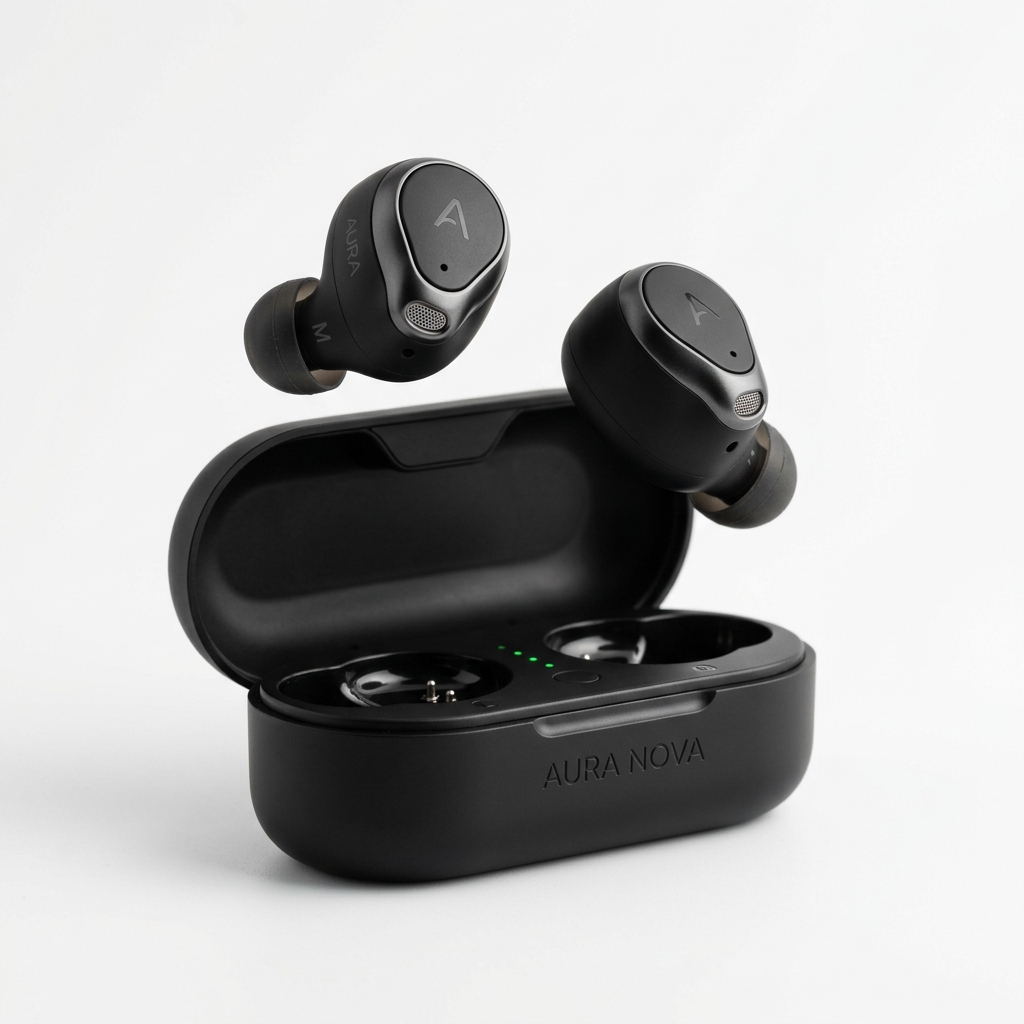
Wireless Headphones
Wireless headphones have come a long way, with advancements in Bluetooth codecs like aptX Lossless and improved low-latency options. While they offer convenience, they still carry limitations for critical studio work. Latency, even with modern codecs, can be a concern for timing-sensitive tasks. The quality of wireless transmission, while improved, can still be slightly inferior to a wired connection. However, they are increasingly useful for monitoring during takes or casual listening in the studio.
- Pros: Freedom of Movement, Convenient
- Cons: Potential Latency, Audio Quality Can Be Compromised, Battery Life Concerns
Impedance: It’s crucial to understand impedance. Measured in Ohms (Ω), it indicates a headphone’s resistance to electrical current. Higher impedance headphones (250Ω+) typically require a dedicated headphone amplifier to deliver sufficient power and volume, while lower impedance headphones (under 80Ω) can be driven directly by most audio interfaces.
Key Features to Look for in Studio Recording Headphones (2026)
Beyond the basic headphone type, several technical specifications are worth considering:
Frequency Response
The range of frequencies a headphone can reproduce. A wider, flatter frequency response (e.g., 20Hz – 20kHz, with minimal peaks or dips) is generally preferred for accurate monitoring. By 2026, we’re seeing more headphones with frequency response curves tailored specifically for mixing, with subtle adjustments to address common perceptual biases.
Total Harmonic Distortion (THD)
Measures the amount of distortion added to the signal. Lower THD values (e.g., below 0.1%) indicate a cleaner, more accurate sound.
Impedance
(As discussed above) Matching impedance to your audio interface or headphone amplifier is vital for optimal performance.
Sensitivity
Indicates how loud the headphones will be for a given input signal. Higher sensitivity means the headphones will be louder with less power.
Driver Size
Generally, larger drivers (e.g., 40mm or 50mm) can produce a wider frequency response and more powerful bass. However, driver size isn’t the only factor determining sound quality.
Comfort
Long studio sessions demand comfortable headphones. Consider earcup material (velour, leatherette), headband padding, and overall weight.
Advancements in 2026: We’re seeing increased integration of spatial audio technology in headphones, promising a more immersive mixing experience. Advanced noise cancellation techniques are also improving, offering better isolation without compromising sound quality. AI-powered headphone profiles that automatically adjust the sound based on your ear shape are also beginning to emerge.
Top Closed-Back Headphones for Studio Recording (2026)
Here are some of the best closed-back options available in 2026:
| Model | Price (GBP) | Sound Quality | Isolation | Comfort |
|---|---|---|---|---|
| Sony MDR-7506 | £99.99 | Clear, accurate, slightly bright | Excellent | Good, but can be tight |
| Beyerdynamic DT 770 Pro | £149.99 | Detailed, well-balanced, strong bass | Very Good | Excellent, plush velour earcups |
| Focal Listen Professional | £349.99 | Neutral, precise, excellent clarity | Excellent | Very Comfortable, lightweight |
Top Open-Back Headphones for Studio Recording (2026)
For mixing and mastering, these open-back headphones deliver exceptional sonic performance:
| Model | Price (GBP) | Sound Quality | Soundstage | Comfort |
|---|---|---|---|---|
| Sennheiser HD 660S2 | £399.99 | Natural, balanced, refined | Wide, spacious | Excellent, comfortable earpads |
Wireless Headphones for Studio Recording: Are They Viable in 2026?
While not ideal for critical mixing, wireless headphones are becoming increasingly useful for certain studio tasks. Models like the Audio-Technica ATH-M50xBT2 (£199.99) offer decent sound quality and low-latency Bluetooth codecs. However, for final mix decisions, a wired connection is still recommended.
Latency Concerns: Even with aptX Lossless, there’s still a small amount of latency. For tracking, this is usually negligible, but for tasks requiring precise timing, it can be problematic. Some audio interfaces now offer Bluetooth 5.3 with improved latency compensation, but a wired connection remains the most reliable option.
Headphone Amplifiers: Do You Need One?
If you’re using high-impedance headphones (250Ω or higher), a headphone amplifier is highly recommended. It provides sufficient power to drive the headphones to their full potential, resulting in increased volume, clarity, and dynamic range.
Recommendations:
- Affordable: iFi Zen DAC V2 (£129.99) – A versatile DAC/amp combo.
- High-End: Chord Mojo 2 (£699.00) – A portable, high-resolution DAC/amp for audiophile-grade performance.
Headphone Care and Maintenance
To prolong the lifespan of your studio headphones:
- Store them in a case when not in use.
- Clean the earcups regularly with a soft, damp cloth.
- Avoid exposing them to extreme temperatures or humidity.
- Replace earcups as needed.
Conclusion: Choosing the Best Headphones for Your Studio
The “best” headphones for studio recording depend on your individual needs and budget. If you’re primarily tracking, a comfortable, isolating closed-back pair like the Beyerdynamic DT 770 Pro is an excellent choice. For mixing and mastering, the Sennheiser HD 660S2 offers exceptional clarity and a natural soundstage. Wireless headphones can be useful for casual monitoring, but rely on a wired connection for critical listening. Don’t forget to consider a headphone amplifier if you’re using high-impedance headphones. Investing in quality headphones is a crucial step towards achieving professional-sounding recordings in 2026 and beyond.
FAQ
Q: Are expensive headphones always better?
Not necessarily. While price often correlates with quality, it’s more important to choose headphones that match your specific needs and workflow. A well-chosen mid-range pair can outperform an expensive pair that isn’t suited to your tasks.
Q: Can I use gaming headphones for studio recording?
Generally, no. Gaming headphones are often tuned for exaggerated bass and gaming effects, which isn’t ideal for accurate monitoring. Studio headphones prioritize a flat, neutral frequency response.
Q: What’s the difference between a DAC and a headphone amplifier?
A DAC (Digital-to-Analog Converter) converts digital audio signals into analog signals that headphones can reproduce. A headphone amplifier boosts the analog signal to drive the headphones. Many devices combine both functions into a single unit.
Q: How often should I replace my headphone earcups?
This depends on usage and the material of the earcups. Leatherette earcups generally need replacing every 6-12 months, while velour earcups may last longer. Replace them when they become worn, cracked, or uncomfortable.
Q: Is it really necessary to have both closed-back and open-back headphones?
For a comprehensive studio setup, yes. Closed-back headphones are essential for tracking, while open-back headphones are ideal for mixing and mastering. Having both allows you to cover all stages of the production process effectively.