Table of Contents
As an Amazon Associate, we earn from qualifying purchases. This means we may receive a small commission at no extra cost to you when you buy through links on this page.
Understanding Hearing Loss & Headphones
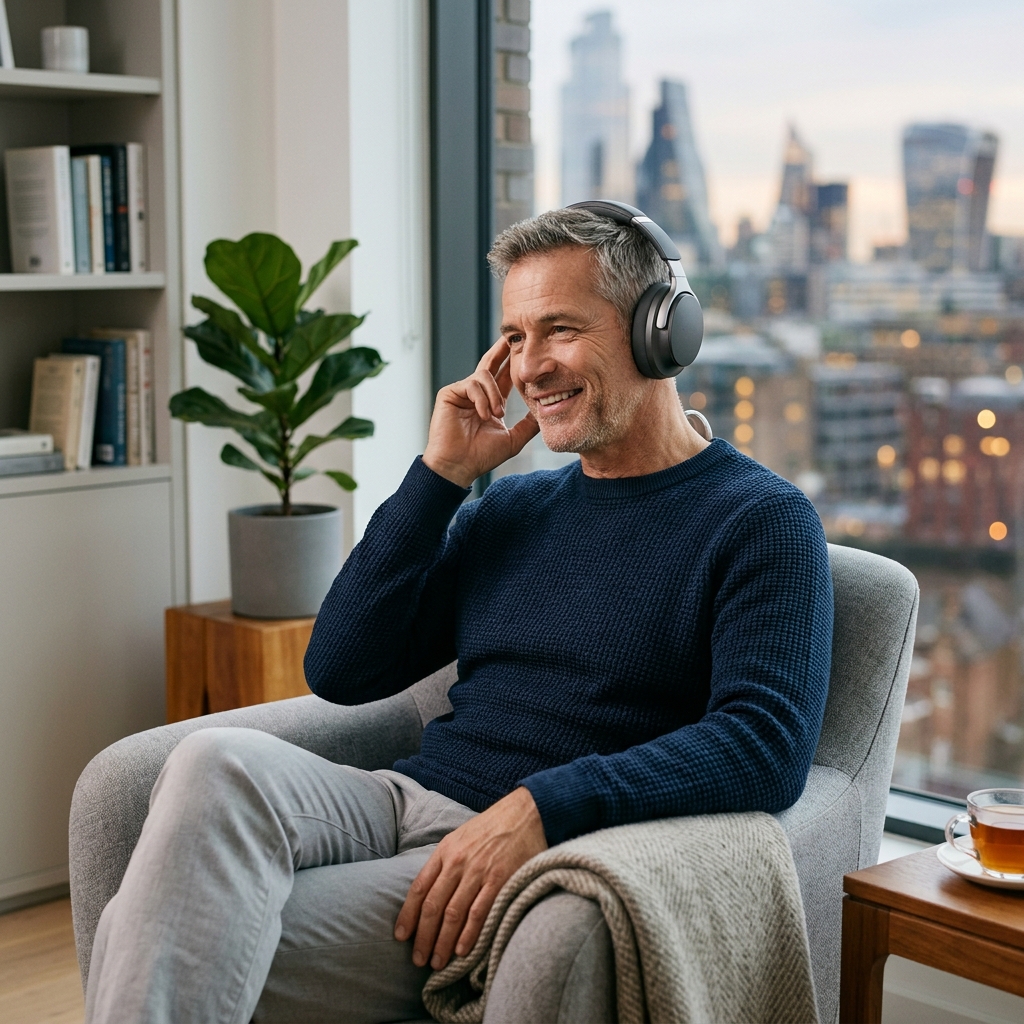
Hearing loss is a common condition, affecting millions of people in the UK. It ranges from mild difficulty in certain frequencies to more significant loss impacting daily life. Headphones can be a valuable tool for those with hearing loss, offering amplified sound, improved clarity, and a more immersive audio experience. The benefits vary depending on the type and severity of the loss. For mild to moderate loss, amplification and targeted frequency boosting can be incredibly helpful. For those struggling with background noise, noise cancellation can significantly improve audibility. It’s important to remember that headphones are *not* a substitute for professional hearing care; a hearing test is crucial for accurate diagnosis and advice. There’s a common myth that using headphones can *cause* hearing loss; however, it’s typically exposure to excessively loud volumes over prolonged periods that’s the issue, not the headphones themselves.
Key Features to Look For in Headphones for Hearing Loss
Choosing the right headphones requires careful consideration. Here are the key features to prioritise:
- Amplification Levels: The ability to boost specific frequencies, particularly those most affected by your hearing loss.
- Frequency Response: Look for headphones that offer a wider frequency response and the ability to tailor the sound profile. Many now offer adjustable EQ settings via companion apps.
- Noise Cancellation: Active Noise Cancellation (ANC) reduces background noise, making it easier to hear the desired audio.
- Hearing Aid Compatibility (HAC) Rating: If you use hearing aids, a higher HAC rating ensures better compatibility and reduced feedback.
- Comfortable Fit: Essential for prolonged use. Consider over-ear, on-ear, or in-ear options based on your preference and comfort.
Bone Conduction Technology: This innovative technology transmits sound through the bones of your skull, bypassing the eardrum. It can be a good option for certain types of hearing loss, especially conductive hearing loss.
Types of Headphones for Hearing Loss
Over-Ear Headphones
Pros: Generally offer the best sound quality, excellent noise isolation, and comfortable fit for longer listening sessions. Often have powerful amplification options.
Cons: Can be bulky and less portable than other types.
On-Ear Headphones
Pros: More portable than over-ear headphones, good sound quality, and often more affordable.
Cons: May not provide as much noise isolation or comfort as over-ear models.
Earbuds (True Wireless & Neckband)
Pros: Highly portable, convenient, and increasingly offer noise cancellation and amplification features.
Cons: Sound quality can vary greatly, and fit can be an issue for some users. Battery life can be limited.
Bone Conduction Headphones
Pros: Leave the ear canal open, allowing you to remain aware of your surroundings. Good for certain types of hearing loss. Comfortable for some users.
Cons: Sound quality isn’t typically as rich as traditional headphones. Can experience sound leakage at higher volumes.
Top 5 Amplified Headphones (UK 2026)
| Model | Price (GBP) | Amplification | Sound Quality | Comfort |
|---|---|---|---|---|
| Beurer HA 30 Headphones | £89.99 | Excellent, dedicated amplification controls | Good, clear audio | Very Comfortable |
| Nuheara IQbuds3 Max | £249.00 | Customizable amplification profiles | Very Good, balanced sound | Good, multiple ear tip sizes |
| Jabra Enhance Plus | £199.00 | Personalized Sound Amplification | Good, clear vocals | Compact and lightweight |
| Soundcore Liberty 4 NC | £149.99 | Adjustable EQ with amplification boost | Excellent for the price | Good, comfortable fit |
| Sony WH-1000XM6 | £349.99 | Excellent sound quality with customizable EQ | Outstanding | Superior Comfort |
Top 5 Noise-Cancelling Headphones (UK 2026)
| Model | Price (GBP) | Noise Cancellation | Sound Quality | Comfort |
|---|---|---|---|---|
| Sony WH-1000XM6 | £349.99 | Industry-leading ANC | Exceptional | Excellent |
| Sennheiser Momentum 4 Wireless | £299.00 | Highly effective ANC | Excellent, detailed sound | Very Comfortable |
| Soundcore Liberty 4 NC | £149.99 | Excellent ANC for the price | Very Good | Good |
| Nuheara IQbuds3 Max | £249.00 | Adaptive ANC | Good, customizable | Good |
| Jabra Enhance Plus | £199.00 | Good ANC for earbuds | Clear and balanced | Compact and lightweight |
Top 3 Hearing Aid Compatible (HAC) Headphones (UK 2026)
| Model | Price (GBP) | HAC Rating | Compatibility | Audio Quality |
|---|---|---|---|---|
| Beurer HA 30 Headphones | £89.99 | M3/T3 | Most Hearing Aids | Good |
| Nuheara IQbuds3 Max | £249.00 | M3/T3 | Most Hearing Aids | Very Good |
| Jabra Enhance Plus | £199.00 | M3/T3 | Most Hearing Aids | Good |
Bone Conduction Headphones: A New Option?
Bone conduction headphones, like the AfterShokz OpenRun Pro (£199.95), offer a unique solution. They bypass the eardrum, transmitting sound via vibrations through the cheekbones. This is particularly useful for people with conductive hearing loss. However, sound quality typically isn’t as full or immersive as traditional headphones. They are excellent for situational awareness as your ears remain open.
Where to Buy Headphones for Hearing Loss in the UK (2026)
- Specsavers: https://www.specsavers.co.uk/
- Boots: https://www.boots.com/
- Independent Hearing Centres: Search online for local providers.
- Amazon UK: https://www.amazon.co.uk/
- Currys: https://www.currys.co.uk/
Caring for Your Headphones & Maintaining Sound Quality
To ensure longevity and optimal performance:
- Clean your headphones regularly with a soft, dry cloth.
- Store them in a protective case when not in use.
- Avoid exposing them to extreme temperatures or moisture.
- Keep the charging ports clean.
- Regularly update the firmware (if applicable).
FAQs: Headphones & Hearing Loss
Q: Can headphones actually improve my hearing?
A: Headphones can amplify sound and improve clarity, making it easier to hear, but they do not *restore* hearing. They are a helpful tool, but not a cure for hearing loss.
Q: Is it safe to use headphones with hearing loss?
A: Yes, as long as you keep the volume at a safe level. Start with a low volume and gradually increase it until you can hear comfortably. Avoid prolonged exposure to loud sounds.
Q: What is a good volume level when using headphones?
A: The general rule is to keep the volume below 60% of the maximum. A good test is if people nearby can’t easily hear what you’re listening to.
Q: What’s the difference between ANC and Noise Isolation?
A: Noise Isolation physically blocks out sound using the headphone’s design (e.g., over-ear cups). Active Noise Cancellation uses microphones to detect external noise and create an opposing sound wave to cancel it out.
Q: Are bone conduction headphones suitable for all types of hearing loss?
A: Bone conduction headphones are most effective for conductive hearing loss, where sound transmission through the outer or middle ear is impaired. They may not be as beneficial for sensorineural hearing loss.