Table of Contents
Introduction: Why the Right Headphones Matter for Flights
Air travel, while convenient, can be a sensory assault. The constant drone of engines, chattering passengers, and the general bustle of the cabin can quickly lead to fatigue and stress. The right headphones are no longer a luxury, but an essential travel companion. They offer a sanctuary of sound, allowing you to enjoy your favourite music, podcasts, or audiobooks, or simply revel in peaceful silence. By 2026, advancements in noise cancellation, battery technology, and comfort are expected to make airplane travel even more enjoyable. We’ll explore the best options available for UK flyers, helping you find the perfect pair to elevate your in-flight experience.
Understanding Noise Cancellation: ANC vs. Passive
There are two main types of noise cancellation: Active Noise Cancellation (ANC) and Passive Noise Isolation. Passive Noise Isolation relies on the physical design of the headphones – the earcups or earbuds themselves – to block out external sound. Think of it like earplugs. It’s effective at reducing high-frequency noises but struggles with lower frequencies like engine rumble. Active Noise Cancellation (ANC), on the other hand, uses microphones to detect external noise and then creates an opposing sound wave to cancel it out.
By 2026, ANC technology is expected to be significantly improved, with advancements in AI-powered noise cancellation algorithms. These algorithms will be able to dynamically adjust to different noise environments, providing more effective and personalized cancellation. We’re also anticipating hybrid ANC systems becoming more common, combining feedforward and feedback microphones for greater accuracy. While passive isolation is a good starting point, ANC is crucial for tackling the deep, persistent drone of airplanes.
Earbuds vs. Over-Ear Headphones: Which is Best for Flying?
The choice between earbuds and over-ear headphones depends on your priorities. Earbuds are incredibly portable, lightweight, and often more affordable. However, their noise cancellation isn’t typically as effective as over-ear headphones, and long-term comfort can be an issue due to ear fatigue. Over-ear headphones provide superior noise cancellation, generally offer better sound quality, and are often more comfortable for extended wear, thanks to larger, more cushioned earcups. They are bulkier, however, and can take up more space in your carry-on luggage.
For long-haul flights, over-ear headphones are generally the preferred choice. But if portability is paramount, a high-quality pair of noise-cancelling earbuds can be a good compromise.
Top 5 Noise-Cancelling Earbuds for Airplane Travel (2026)
1. Apple AirPods Pro 3 (Estimated £280)
The third generation AirPods Pro are expected to feature even more refined ANC and a more comfortable fit. Apple’s spatial audio technology will also be enhanced, creating a more immersive listening experience. Battery life is predicted to be around 6 hours with ANC enabled.
2. Sennheiser Momentum True Wireless 4 (Estimated £250)
Sennheiser continues to deliver exceptional sound quality, and the Momentum True Wireless 4 are no exception. Expect improved ANC performance, a more customizable fit, and support for high-resolution audio codecs. Battery life: approximately 7.5 hours.
3. Technics EAH-AZ80 (Estimated £220)
Technics offers a strong combination of sound quality, noise cancellation and comfort. The AZ80 models are expected to have refined ANC, improved call quality, and a sleek design. Battery life: up to 7 hours.
4. Jabra Elite 8 Active (Estimated £180)
Known for their durability and secure fit, the Jabra Elite 8 Active are ideal for active travellers. They will likely offer robust ANC, sweat and water resistance, and excellent call clarity. Battery life: up to 8 hours.
5. Anker Soundcore Space Q45 (Estimated £100)
Anker consistently delivers excellent value for money. The Space Q45 is expected to offer surprisingly effective ANC for its price point, along with a comfortable fit and long battery life. Battery life: up to 50 hours with ANC.
Top 5 Over-Ear Headphones for Airplane Travel (2026)
1. Bose QuietComfort Ultra Headphones (Estimated £400)
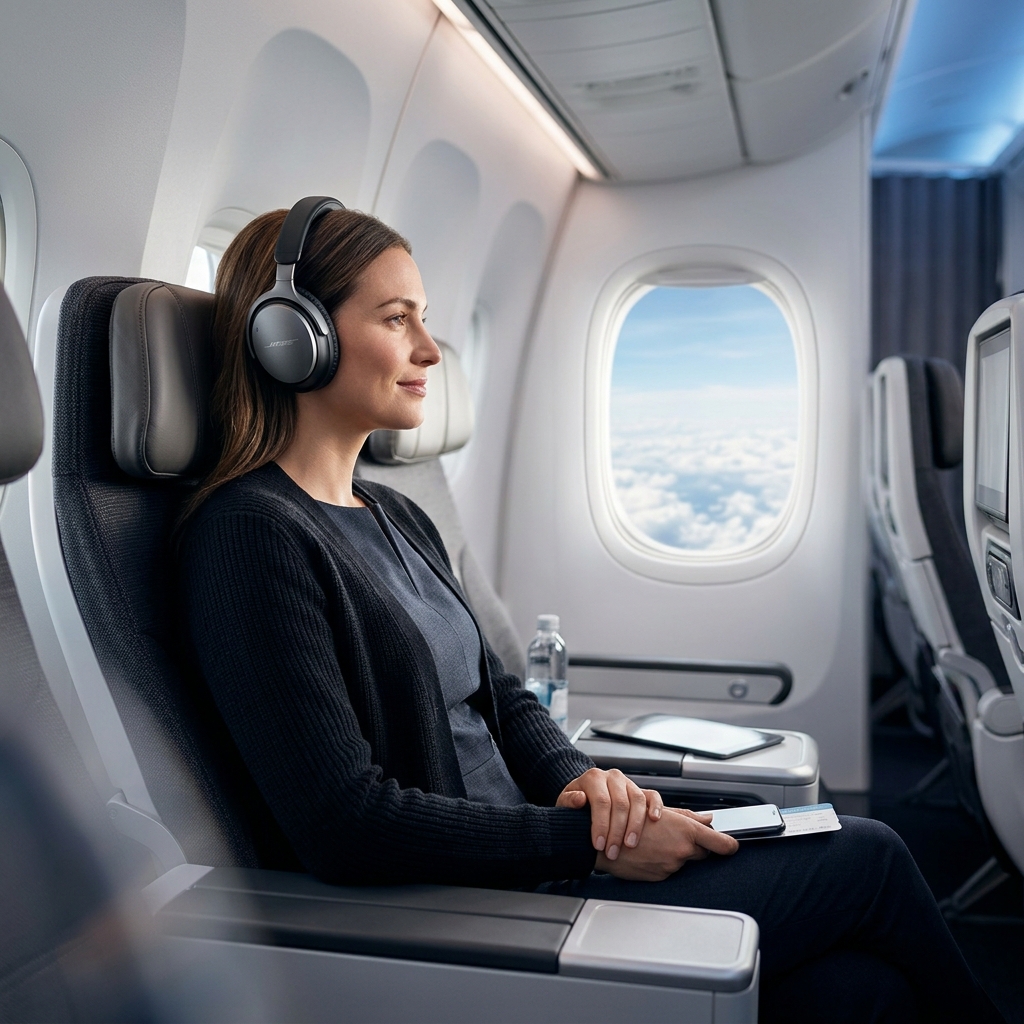
Bose remains a leader in noise cancellation technology. The QuietComfort Ultra Headphones are anticipated to offer the most advanced ANC available, along with a supremely comfortable fit and immersive sound quality. Battery life: up to 24 hours.
2. Sony WH-1000XM6 (Estimated £350)
Sony’s WH-1000XM series consistently receives critical acclaim. The XM6 are expected to build on this success with improved ANC, refined sound quality, and a more lightweight design. Battery life: up to 30 hours.
3. Bowers & Wilkins PX8 (Estimated £450)
For audiophiles, the PX8 offer a premium listening experience with exceptional sound quality and a luxurious design. Expect top-tier ANC and comfortable earcups. Battery life: up to 30 hours.
4. Sennheiser Momentum 4 Wireless (Estimated £300)
Sennheiser’s Momentum 4 Wireless are expected to continue offering a superb balance of sound quality, noise cancellation, and comfort. Battery life: up to 60 hours.
5. Technics EAH-A800 (Estimated £280)
Technics provides a well-rounded package with excellent sound reproduction, effective ANC, and a comfortable fit. Battery life: up to 50 hours
Key Features to Look for in Airplane Headphones (2026)
- Noise Cancellation Strength: Prioritize headphones with advanced ANC technology.
- Battery Life (and Quick Charging): Aim for at least 20 hours of battery life, or consider headphones with quick charging capabilities.
- Comfort (Earcups, Headband): Pay attention to the materials and design of the earcups and headband, especially for long flights.
- Bluetooth Connectivity (and Codecs): Look for Bluetooth 5.3 or later for a stable connection and support for high-quality audio codecs like aptX Adaptive or LDAC.
- Wired Option: A wired connection can be useful if Bluetooth connectivity is problematic or if the airline doesn’t allow wireless devices.
- Portability (Folding Design, Case): A folding design and a protective case are essential for travel.
- Microphone Quality for Calls: If you plan to make calls during your flight, ensure the headphones have a clear microphone.
Budget Options: Affordable Headphones for Airplane Travel
You don’t need to spend a fortune to get decent noise cancellation for airplane travel. The Anker Soundcore Space Q45 (£100) and earlier models like the Soundcore Life Q30 offer impressive value for money. Look for models with at least basic ANC and comfortable earcups. Many brands also offer refurbished options at significant discounts.
Maintaining Your Headphones During Travel
Protecting your investment is crucial. Store your headphones in their protective case when not in use. Clean them regularly with a soft, dry cloth. Be mindful of airline headphone jacks – some may be damaged or incompatible. Avoid exposing your headphones to extreme temperatures or humidity.
Future Trends in Airplane Headphones (2026 & Beyond)
The future of airplane headphones is exciting. We can expect to see personalized noise cancellation, where headphones adapt to your unique ear shape and the specific noise environment. Spatial audio will become more immersive, creating a more realistic soundstage. AI-powered features will optimize noise cancellation and sound quality based on your listening preferences. Finally, improvements in battery efficiency will lead to even longer battery life.
Conclusion: Choosing the Right Headphones for Your Next Flight
Choosing the best headphones for airplane travel depends on your individual needs and budget. For the ultimate noise cancellation and comfort, the Bose QuietComfort Ultra Headphones are hard to beat. If you prioritize sound quality and a luxurious experience, the Bowers & Wilkins PX8 are an excellent choice. For a more affordable option, the Anker Soundcore Space Q45 offers impressive value. Ultimately, invest in a pair of headphones that will transform your next flight from a stressful experience into a peaceful and enjoyable journey.
FAQ
Q: Are noise-cancelling headphones worth the investment for air travel?
Absolutely. The reduction in noise pollution can significantly reduce stress and fatigue during flights, leading to a more comfortable and enjoyable travel experience.
Q: Can I use noise-cancelling headphones during takeoff and landing?
Yes, most airlines allow the use of noise-cancelling headphones during all phases of flight. However, it’s always best to check with your airline if you have any concerns.
Q: What’s the difference between Bluetooth codecs like aptX and LDAC?
These are different methods of transmitting audio over Bluetooth. aptX and LDAC offer higher-quality audio than the standard SBC codec, resulting in a more detailed and immersive listening experience.
Q: How often should I clean my headphones?
It’s recommended to clean your headphones at least once a week, or more frequently if you use them often. Use a soft, dry cloth to wipe down the earcups and headband.
Q: Will headphones with a built-in microphone work with the airplane’s entertainment system?
Usually, yes. Most modern headphones with a microphone will work with the airplane’s entertainment system via the standard 3.5mm headphone jack. However, compatibility can vary, so it’s worth testing before you settle in.