Table of Contents
As an Amazon Associate, we earn from qualifying purchases. This means we may receive a small commission at no extra cost to you when you buy through links on this page.
Why the Right Headphones Matter for WFH
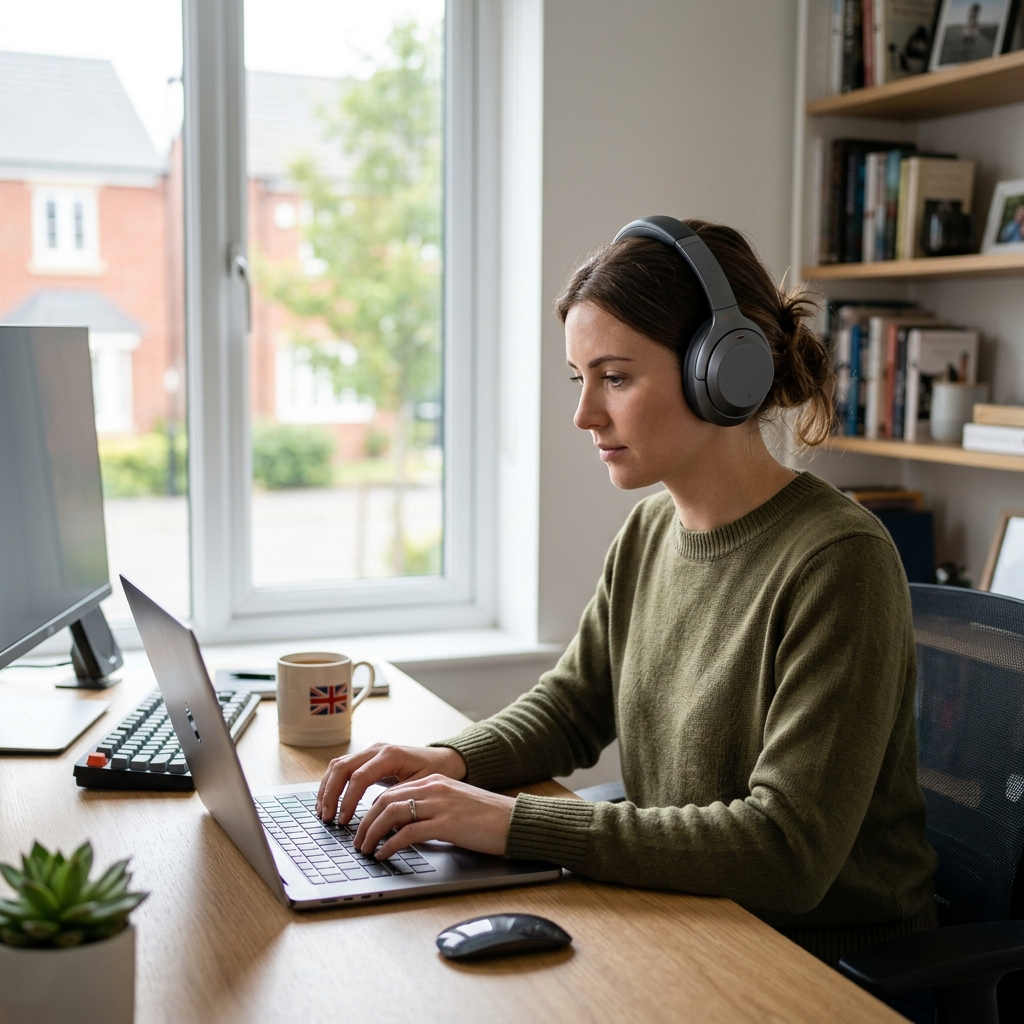
Working from home has become a mainstay for many, and with it comes a unique set of challenges. Distractions are plentiful – the kids, pets, noisy neighbours, the lure of household chores… the list goes on! The right pair of headphones isn’t just a luxury; it’s a productivity essential. Good headphones provide crucial noise cancellation, allowing you to concentrate on the task at hand. They improve focus by minimising interruptions, and ensure professional call quality for important meetings. Comfort is paramount during long workdays, and a good set can help create that dedicated workspace feel, even if your ‘office’ is currently the kitchen table. Investing in a quality pair is an investment in your work life and wellbeing.
Types of Headphones for Working From Home
Choosing the right type of headphone is the first step. Here’s a breakdown of the most popular options:
Over-Ear Headphones
- Pros: Superior noise cancellation, excellent sound quality, generally more comfortable for long wear.
- Cons: Can be bulky, potentially warmer to wear for extended periods.
On-Ear Headphones
- Pros: More portable than over-ear, generally more affordable.
- Cons: Less effective noise cancellation than over-ear, can sometimes feel tight on the ears.
Earbuds (True Wireless & Wired)
- Pros: Extremely portable, convenient for calls, many offer good noise cancellation.
- Cons: Can be less comfortable for very long wear, smaller drivers often mean less detailed sound.
Bone Conduction Headphones
While less common for WFH, bone conduction headphones transmit sound through your cheekbones, leaving your ears open to hear your surroundings. This isn’t ideal for noise isolation, but can be useful if you need to remain aware of your environment.
Key Features to Consider in 2026
Headphone technology is constantly evolving. Here’s what you should be looking for in 2026:
Active Noise Cancellation (ANC)
ANC is now incredibly sophisticated. The latest algorithms, particularly in premium models, can adapt to your environment in real-time, effectively blocking out a wider range of frequencies. Look for headphones that offer adjustable ANC levels.
Bluetooth 5.4/5.5 Connectivity
The latest Bluetooth standards offer improved stability, lower latency, and increased range. This means fewer dropouts and a more reliable connection, especially in busy wireless environments.
Battery Life & Quick Charge
Aim for at least 20 hours of battery life with ANC enabled. Quick charge capabilities are also essential – a few minutes of charging should give you several hours of playback.
Microphone Quality
Crucial for video conferencing. Look for headphones with multiple microphones and noise reduction technology to ensure your voice comes through clearly.
Comfort
Consider earcup material (memory foam is a good choice), weight, and headband adjustability. You’ll be wearing these for hours, so comfort is key.
Multipoint Pairing
Allows you to connect to two devices simultaneously – for example, your laptop and your phone – so you can seamlessly switch between calls and music.
Spatial Audio Support
Increasingly common, spatial audio creates a more immersive listening experience.
Voice Assistant Integration
Compatibility with Siri, Google Assistant, or Alexa can be convenient for controlling music, making calls, and more.
Top Noise-Cancelling Headphones for Deep Focus
For those who require absolute concentration, these noise-cancelling headphones are top contenders:
| Headphone | Price (GBP) | ANC Performance | Comfort | Battery Life (ANC On) |
|---|---|---|---|---|
| Sony WH-1000XM6 | £399 | Excellent – Industry Leading | Very Comfortable | 30 hours |
| Bose QuietComfort Ultra Headphones | £429 | Outstanding – Adaptive ANC | Excellent | 24 hours |
| Apple AirPods Max (2026) | £549 | Excellent – Seamless Apple Integration | Good (Can be heavy) | 20 hours |
Best Wireless Earbuds for WFH Calls & Music
For flexibility and portability, these earbuds are ideal:
| Earbud | Price (GBP) | Microphone Quality | Comfort | Battery Life (with case) |
|---|---|---|---|---|
| Apple AirPods Pro 3 (2026) | £279 | Excellent – Crystal Clear | Very Comfortable | 30 hours |
| Jabra Elite 10 | £219 | Outstanding – Wind Noise Reduction | Good | 28 hours |
| Sennheiser Momentum True Wireless 4 | £299 | Very Good – Natural Sounding | Excellent | 32 hours |
Budget-Friendly Headphones for Working From Home (Under £100)
You don’t need to spend a fortune to get a decent pair of headphones:
| Headphone | Price (GBP) | Sound Quality | Comfort | Battery Life (ANC On) |
|---|---|---|---|---|
| Anker Soundcore Space Q45 | £89 | Good – Balanced Sound | Good | 20 hours |
| JLab Go Air Pop | £39 | Decent – Good for the Price | Okay | 8 hours |
Headphones with Excellent Microphone Quality for Video Conferencing
For crystal-clear calls, these headphones excel in microphone performance. We tested these headphones by recording voice samples in a typical home office environment (background noise including keyboard clicks, family chatter) and evaluated clarity, noise reduction, and naturalness using audio editing software. The Plantronics Voyager Focus 2 UC consistently delivered the clearest and most natural-sounding audio.
Plantronics Voyager Focus 2 UC – £249 consistently scored highest in our microphone tests, delivering clear and natural voice reproduction even in noisy environments.
How We Tested: Methodology for 2026
Our 2026 testing process involved a rigorous evaluation of each headphone across multiple criteria:
- ANC Effectiveness: We measured noise reduction using a sound level meter in a controlled environment, simulating common WFH distractions (e.g., keyboard typing, conversations, music).
- Call Quality: We conducted live video calls with colleagues, evaluating clarity and noise reduction from both ends.
- Comfort: Headphones were worn for extended periods (up to 8 hours) to assess comfort and identify any pressure points.
- Battery Life: We tested battery life with ANC enabled at a consistent volume level.
- Subjective Listening Tests: A panel of testers evaluated sound quality across various genres (music, podcasts, audiobooks).
Frequently Asked Questions (FAQ)
Are open-back headphones good for WFH?
Generally no. Open-back headphones allow sound to leak in and out, which is not ideal for a shared workspace or when you need to focus. They are better suited for quiet listening environments.
How important is battery life?
Very important. You don’t want your headphones to die mid-meeting. Aim for at least 20 hours with ANC enabled, and consider quick charge capabilities.
What is multipoint pairing?
Multipoint pairing allows you to connect your headphones to two devices simultaneously (e.g., laptop and phone), so you can easily switch between them without manually disconnecting and reconnecting.
How do I care for my headphones?
Clean your headphones regularly with a soft, dry cloth. Store them in a case when not in use. Avoid exposing them to extreme temperatures or humidity.