Table of Contents
As an Amazon Associate, we earn from qualifying purchases. This means we may receive a small commission at no extra cost to you when you buy through links on this page.
Why Headphones Enhance the Film Watching Experience
In 2026, the way we consume film continues to evolve, but the desire for a truly immersive cinematic experience remains constant. While large television screens offer visual spectacle, they often fall short in delivering the nuanced and captivating audio that filmmakers intend. That’s where headphones come in. Using headphones for movies provides a level of immersion unmatched by standard TV speakers. You’re enveloped in sound, free from distractions, and able to pick up subtle audio details – a whisper, a footstep, the score’s delicate nuances – that would otherwise be lost.
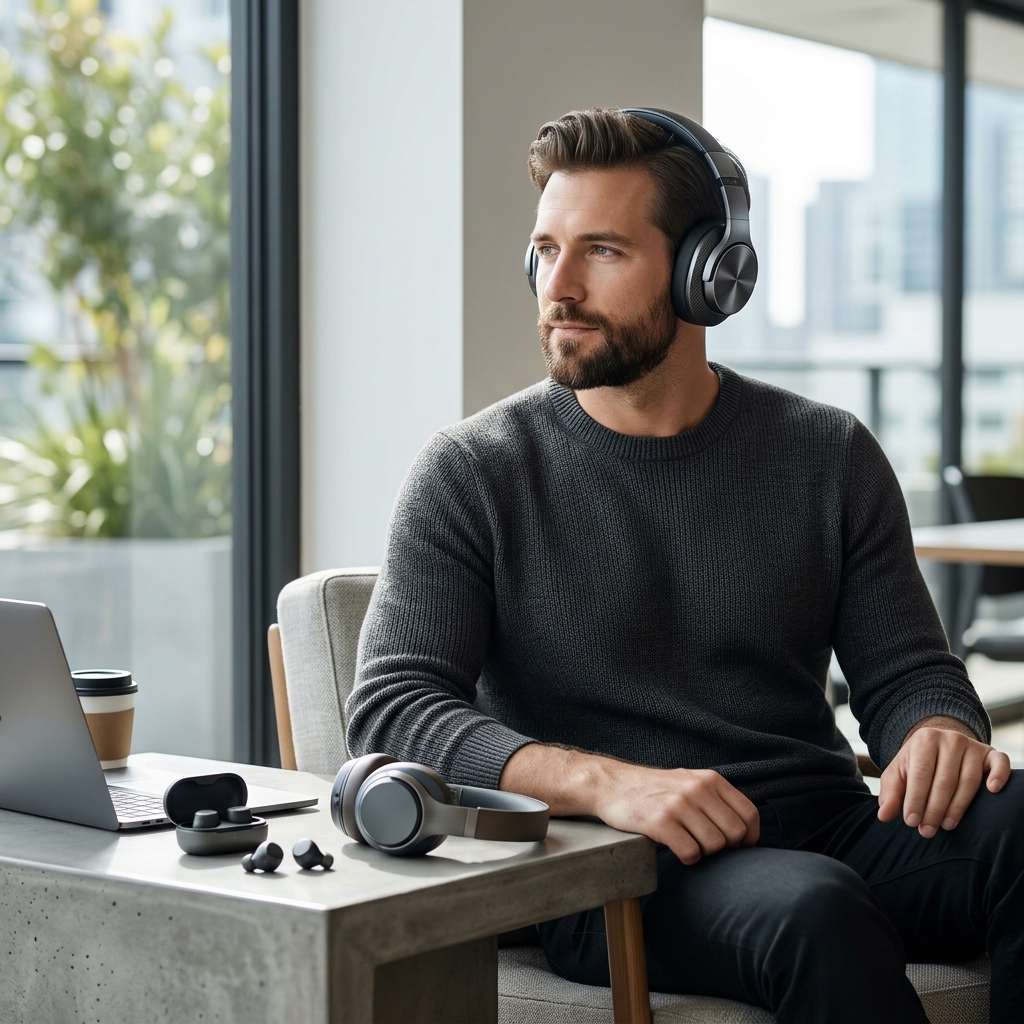
Beyond simply hearing more, headphones offer a private listening experience, ideal for late-night viewing or shared living spaces. Crucially, a good pair of headphones can create a wider soundstage, the perceived width and depth of the audio, and increasingly, leverage spatial audio technologies like Dolby Atmos to place sounds realistically around you, replicating the feeling of being in a cinema.
Understanding Key Features for Film Headphones
Choosing the right headphones for film viewing isn’t just about brand recognition. Several key specifications impact your enjoyment:
- Sound Quality: Look for a wide frequency response (20Hz – 20kHz is standard, but lower frequencies are crucial for impactful bass). Clarity is essential – you want to hear every detail without distortion.
- Surround Sound Capabilities: Support for formats like Dolby Atmos and DTS:X is now commonplace, creating a more immersive 3D audio experience.
- Comfort: You’ll be wearing these for potentially hours, so comfortable earcups (over-ear are generally best) and a well-padded headband are crucial.
- Wireless Connectivity: Bluetooth codecs like aptX Adaptive and LDAC offer significantly better audio quality than standard SBC.
- Noise Cancellation (ANC): Active Noise Cancellation blocks out external distractions, further enhancing immersion.
- Battery Life: For wireless headphones, a long battery life (20+ hours) is desirable.
Top Wired Headphones for Film Buffs (2026)
For purists who prioritise uncompromised audio quality, wired headphones remain a compelling option.
Sennheiser HD 660S2
The updated HD 660S2 builds upon a legendary reputation. Its open-back design provides a spacious soundstage, perfect for films with complex audio mixes. The balanced sound signature delivers exceptional clarity and detail.
| Feature | Specification |
|---|---|
| Price | £400 |
| Type | Open-Back, Over-Ear |
| Frequency Response | 20 Hz – 20 kHz |
| Impedance | 120 Ohms |
| Connector | 6.35mm |
Pros: Exceptional sound quality, wide soundstage, comfortable for long listening sessions.
Cons: Requires a dedicated headphone amplifier, open-back design leaks sound.
Target Audience: Audiophiles and serious film enthusiasts who prioritize sound quality above all else.
Audio-Technica ATH-M50xBT2
A versatile option offering a balanced and accurate sound signature, making it suitable for a variety of film genres. The ATH-M50xBT2 offers both wired and wireless connectivity.
| Feature | Specification |
|---|---|
| Price | £200 |
| Type | Closed-Back, Over-Ear |
| Frequency Response | 15 Hz – 28 kHz |
| Impedance | 38 Ohms |
| Connectivity | Wired & Bluetooth |
Pros: Excellent value for money, versatile sound signature, durable build quality.
Cons: Soundstage isn’t as wide as open-back options, can feel a little tight for some users.
Target Audience: Film viewers seeking a reliable and affordable option with good sound quality.
Best Wireless Headphones for Cinematic Sound (2026)
Sony WH-1000XM6
The WH-1000XM6 remains the benchmark for wireless noise cancellation and all-around performance. It boasts excellent sound quality, exceptional ANC, and impressive battery life.
| Feature | Specification |
|---|---|
| Price | £350 |
| Type | Closed-Back, Over-Ear |
| Bluetooth Codecs | SBC, AAC, LDAC |
| Noise Cancellation | Industry-Leading ANC |
| Battery Life | Up to 30 hours (with ANC) |
Pros: Superb noise cancellation, excellent sound quality, comfortable design, long battery life.
Cons: Can be expensive, some may prefer a more neutral sound signature.
Target Audience: Commuters, travellers, and anyone who wants the best possible wireless experience.
Bose QuietComfort Ultra Headphones
Bose’s latest flagship headphones continue their legacy of comfort and noise cancellation. The Ultra Headphones feature immersive spatial audio and a refined design.
| Feature | Specification |
|---|---|
| Price | £380 |
| Type | Closed-Back, Over-Ear |
| Bluetooth Codecs | SBC, AAC, aptX Adaptive |
| Noise Cancellation | CustomTune Technology |
| Battery Life | Up to 24 hours (with ANC) |
Pros: Unmatched comfort, excellent noise cancellation, immersive spatial audio.
Cons: Expensive, sound quality isn’t quite as detailed as some competitors.
Target Audience: Users prioritizing comfort and noise cancellation above all else.
Immersive Spatial Audio Headphones: The Future of Film Sound
Headphones supporting Dolby Atmos and DTS:X are becoming increasingly popular. These technologies utilize head tracking and advanced processing to create a 3D soundscape, placing sounds accurately around you. The Sony WH-1000XM6 and Bose QuietComfort Ultra Headphones both offer excellent spatial audio implementations. Apple’s AirPods Max also provide a compelling spatial audio experience when paired with Apple devices, leveraging head tracking for a highly realistic effect.
Budget-Friendly Headphones for Film Lovers (Under £100)
Soundcore Space Q45
Offering fantastic value for money, the Space Q45 delivers impressive noise cancellation and sound quality for under £100.
| Feature | Specification |
|---|---|
| Price | £80 |
| Type | Closed-Back, Over-Ear |
| Bluetooth Codecs | SBC, AAC, LDAC |
| Noise Cancellation | Adaptive ANC |
| Battery Life | Up to 50 hours (with ANC) |
Pros: Excellent value, good noise cancellation, long battery life.
Cons: Build quality isn’t as premium as more expensive options.
Target Audience: Budget-conscious film lovers who want a good all-around wireless experience.
Headphones vs. Home Cinema Systems: Which is Best?
This depends on your priorities. A dedicated home cinema system, with a receiver, speakers, and potentially a subwoofer, offers the most expansive and powerful audio experience. However, it’s expensive, requires space, and can be disruptive to others. Headphones, on the other hand, are affordable, space-saving, and offer a private listening experience. For apartment dwellers, late-night viewers, or those on a budget, headphones are often the better choice. They can deliver a surprising level of immersion that rivals a basic home cinema setup.
Tips for Optimizing Your Film Watching Headphone Experience
- EQ Settings: Experiment with your headphone’s EQ settings to boost bass, enhance clarity, or tailor the sound to your preferences.
- Source Material: Streaming services offer convenience, but Blu-ray discs generally provide higher-quality audio.
- Headphone Placement: Ensure the headphones fit snugly and create a good seal around your ears.
- Headphone Hygiene: Regularly clean your headphones to prevent bacteria buildup and maintain sound quality.
FAQ
Q: Are open-back headphones suitable for movie watching in a shared space?
No, open-back headphones leak sound, meaning others nearby will be able to hear what you’re watching. Closed-back headphones are better for shared environments.
Q: What Bluetooth codec should I prioritize?
LDAC and aptX Adaptive offer the best audio quality over Bluetooth. Ensure your source device also supports these codecs.
Q: Is noise cancellation essential for film viewing?
Not essential, but highly recommended. ANC dramatically improves immersion by blocking out distracting ambient sounds.
Q: Can I use any headphones with Dolby Atmos or DTS:X?
No, you need headphones specifically designed to support these spatial audio formats. These headphones utilize specialized processing and head tracking technology.
Q: How often should I replace my headphones?
The lifespan of headphones varies depending on usage and quality. Generally, you can expect 3-5 years of regular use from a well-maintained pair.