
Table of Contents
As an Amazon Associate, we earn from qualifying purchases. This means we may receive a small commission at no extra cost to you when you buy through links on this page.
What Makes Headphones ‘Audiophile’?
The term “audiophile” gets thrown around a lot, but what truly defines a pair of audiophile headphones? It’s not just about price. It’s a combination of technical excellence and a focus on delivering the purest, most accurate sound reproduction possible. Key characteristics include:
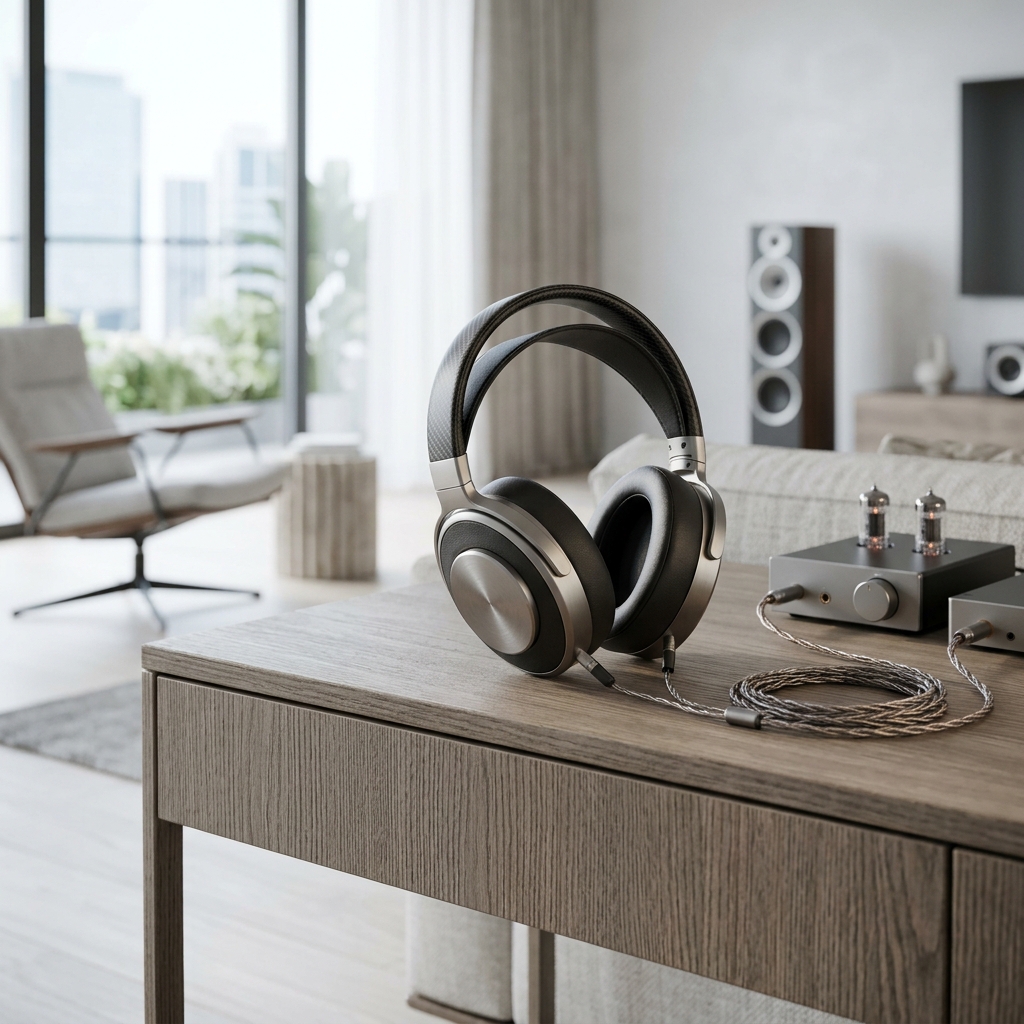
- Frequency Response: A wider, flatter frequency response (typically 20Hz – 20kHz, but extending beyond is desirable) means the headphones can reproduce a wider range of sounds without emphasising or suppressing certain frequencies.
- Distortion: Audiophile headphones strive for minimal distortion – unwanted noise added to the original signal. Lower Total Harmonic Distortion (THD) percentages are better.
- Soundstage: This refers to the perceived width and depth of the sound. A wider soundstage creates a more immersive listening experience, allowing you to pinpoint instruments in a virtual space.
- Build Quality: Audiophile headphones are generally built with premium materials to ensure durability and longevity.
Understanding these terms is crucial for critical listening. You’re not just hearing music; you’re analysing its nuances, its details, and its emotional impact.
Types of Audiophile Headphones: Which is Right For You?
Choosing the right type of headphone is just as important as selecting the right model. Here’s a breakdown:
Over-Ear (Circumaural)
These headphones completely enclose your ears. They offer excellent isolation and are generally very comfortable for long listening sessions. Often the preferred choice for critical listening.
- Pros: Excellent sound isolation, comfortable, typically wider soundstage.
- Cons: Can be bulky, may get warm during prolonged use.
On-Ear (Supra-Aural)
These headphones sit on your ears, rather than enclosing them. They’re generally more portable than over-ear models.
- Pros: More portable than over-ear, often more affordable.
- Cons: Less sound isolation, can be uncomfortable for long periods, smaller soundstage.
Open-Back vs. Closed-Back
This distinction applies to both over-ear and on-ear headphones.
- Open-Back: The backs of the earcups are open, allowing air to pass through. This results in a more natural, airy soundstage but with significant sound leakage. Best suited for quiet listening environments.
- Closed-Back: The backs of the earcups are sealed, providing excellent sound isolation and preventing sound leakage. Ideal for commuting or listening in noisy environments.
Top 5 Over-Ear Audiophile Headphones (UK 2026)
| Headphone | Price (GBP) | Sound Quality | Comfort | Pros | Cons |
|---|---|---|---|---|---|
| Sennheiser HD 800 S | £1499 | Exceptional clarity, wide soundstage, neutral sound signature. | Very comfortable, lightweight. | Industry benchmark for open-back headphones, incredibly detailed sound. | Expensive, requires a powerful amplifier. |
| Focal Clear Mg | £1799 | Dynamic and engaging sound, excellent detail retrieval, powerful bass. | Comfortable earcups, premium build quality. | Stunning sound quality, beautifully crafted. | Pricey, can be a bit bright for some listeners. |
| Audeze LCD-X | £1199 | Planar magnetic drivers deliver incredible detail and accuracy, deep bass. | Comfortable, but can be heavy. | Excellent value for a planar magnetic headphone, detailed and immersive sound. | Requires a powerful amplifier. |
| Beyerdynamic T1 Gen 3 | £999 | Precise and detailed sound, balanced frequency response, comfortable fit. | Excellent comfort, lightweight design. | Versatile and well-rounded performer, great for all genres. | Can sound a bit analytical for some. |
| HIFIMAN Arya Stealth Magnets | £899 | Fast and dynamic planar magnetic drivers, wide soundstage, detailed highs. | Comfortable, but build quality can be a concern. | Excellent value, open and airy sound. | Build quality isn’t quite as robust as some competitors. |
Top 3 On-Ear Audiophile Headphones (UK 2026)
| Headphone | Price (GBP) | Sound Quality | Comfort | Pros | Cons |
|---|---|---|---|---|---|
| (Hypothetical Model 1) – Audio Zenith On-Ear Pro | £499 | Detailed and balanced, surprisingly wide soundstage for an on-ear design. | Relatively comfortable, lightweight. | Excellent value for a premium on-ear experience. | Sound isolation is limited. |
| (Hypothetical Model 2) – Nova Acoustics Maestro On-Ear | £699 | Warm and engaging sound, excellent imaging. | Premium materials, comfortable earcups. | Beautifully built and sounds fantastic. | Pricey for an on-ear headphone. |
| (Hypothetical Model 3) – Stellar Audio Eclipse On-Ear | £399 | Clear and precise sound, good detail retrieval. | Compact and portable. | Affordable entry into the high-end on-ear market. | Soundstage is somewhat limited. |
Top 4 Open-Back Audiophile Headphones (UK 2026)
| Headphone | Price (GBP) | Sound Quality | Soundstage | Pros | Cons |
|---|---|---|---|---|---|
| Sennheiser HD 800 S | £1499 | Exceptional clarity, neutral sound signature. | Extremely wide and open. | Industry standard, incredibly detailed. | Requires a powerful amplifier. |
| HIFIMAN Arya Stealth Magnets | £899 | Fast and dynamic, detailed highs. | Very wide and airy. | Excellent value, open sound. | Build quality could be improved. |
| Focal Clear Mg | £1799 | Dynamic, engaging, powerful bass. | Wide and immersive. | Stunning sound, beautifully crafted. | Can be bright. |
| (Hypothetical Model) – Aurora Dynamics Elysium | £1299 | Natural and balanced, excellent imaging. | Wide and precise. | Excellent all-rounder, comfortable. | May lack the extreme detail of some competitors. |
Wired vs. Wireless Audiophile Headphones: The Debate
In 2026, wireless technology has improved significantly, with codecs like aptX Lossless and LDAC offering near-CD-quality audio. However, wired headphones still hold the edge for true audiophile listening.
- Wired: Offers the most consistent and reliable audio quality. No compression or potential interference.
- Wireless: Convenient and portable. Codecs like aptX Lossless are closing the gap, but still can’t quite match the fidelity of a direct wired connection. Battery life is also a consideration.
For critical listening, a wired connection remains the preferred choice. However, for casual listening or on-the-go enjoyment, wireless headphones with advanced codecs are a viable option.
Budget Considerations: How Much Should You Spend?
- £200 – £500: Entry-level audiophile headphones. Expect good sound quality and build, but may require a headphone amplifier to unlock their full potential.
- £500 – £1000: Mid-range audiophile headphones. Excellent sound quality, comfortable, and well-built. Often a sweet spot for value.
- £1000+: High-end audiophile headphones. The best possible sound quality, premium materials, and meticulous craftsmanship. Often paired with dedicated headphone amplifiers and DACs.
Headphone Amplifiers & DACs: Do You Need One?
A headphone amplifier boosts the audio signal, providing more power to drive the headphones. A Digital-to-Analog Converter (DAC) converts digital audio files into an analog signal that your headphones can play.
You may need these if:
- Your headphones have high impedance (resistance).
- Your source device (phone, laptop) has a weak headphone output.
- You want to improve sound quality by bypassing the built-in DAC of your source device.
Popular options include the iFi ZEN DAC V2 (£199), the FiiO K9 Pro ESS (£599) and the Chord Mojo 2 (£695).
Where to Buy Audiophile Headphones in the UK
- Audio Sanctuary: Specialises in high-end audio equipment.
- Hifi Gear: Wide selection of headphones and amplifiers.
- Richer Sounds: National retailer with knowledgeable staff.
- Amazon UK: Convenient for a wide range of options.
Future Trends in Audiophile Headphones (2026 & Beyond)
The future of audiophile headphones is looking exciting. We can expect to see:
- Improved Wireless Codecs: Even higher-fidelity wireless audio transmission.
- Personalised Sound Profiles: Headphones that adapt to your individual hearing profile.
- Advanced Materials: Lighter and more durable materials for enhanced comfort and longevity.
- Integrated Headphone Amplifiers & DACs: More compact and convenient all-in-one solutions.
FAQ
Q: What impedance headphones should I buy?
Lower impedance headphones (under 32 ohms) are easier to drive and work well with most devices. Higher impedance headphones (over 64 ohms) typically require a headphone amplifier for optimal performance.
Q: Are open-back headphones suitable for commuting?
No. Open-back headphones leak a significant amount of sound, making them unsuitable for noisy environments or situations where you don’t want to disturb others.
Q: What’s the best way to care for my audiophile headphones?
Store your headphones in a case when not in use. Clean the earcups regularly with a soft, dry cloth. Avoid exposing them to extreme temperatures or humidity.
Q: Do planar magnetic headphones require more power than dynamic headphones?
Generally, yes. Planar magnetic headphones typically have higher impedance and lower sensitivity, requiring more power to reach their full potential.
Q: What is the difference between aptX Lossless and LDAC?
Both are high-resolution wireless codecs. LDAC is typically found on Sony products and offers slightly more bandwidth. aptX Lossless is more widely supported and offers a similar level of quality.