
Practising electric guitar shouldn’t mean upsetting the neighbours, and recording shouldn’t require a professional studio. Modern headphones offer a fantastic solution for both, allowing you to immerse yourself in your playing and hear every nuance of your tone. This guide will navigate the world of headphones for guitarists, covering everything from wireless options to studio-grade monitoring, helping you find the perfect pair for your needs. All prices quoted are in GBP (£).
As an Amazon Associate, we earn from qualifying purchases. This means we may receive a small commission at no extra cost to you when you buy through links on this page.
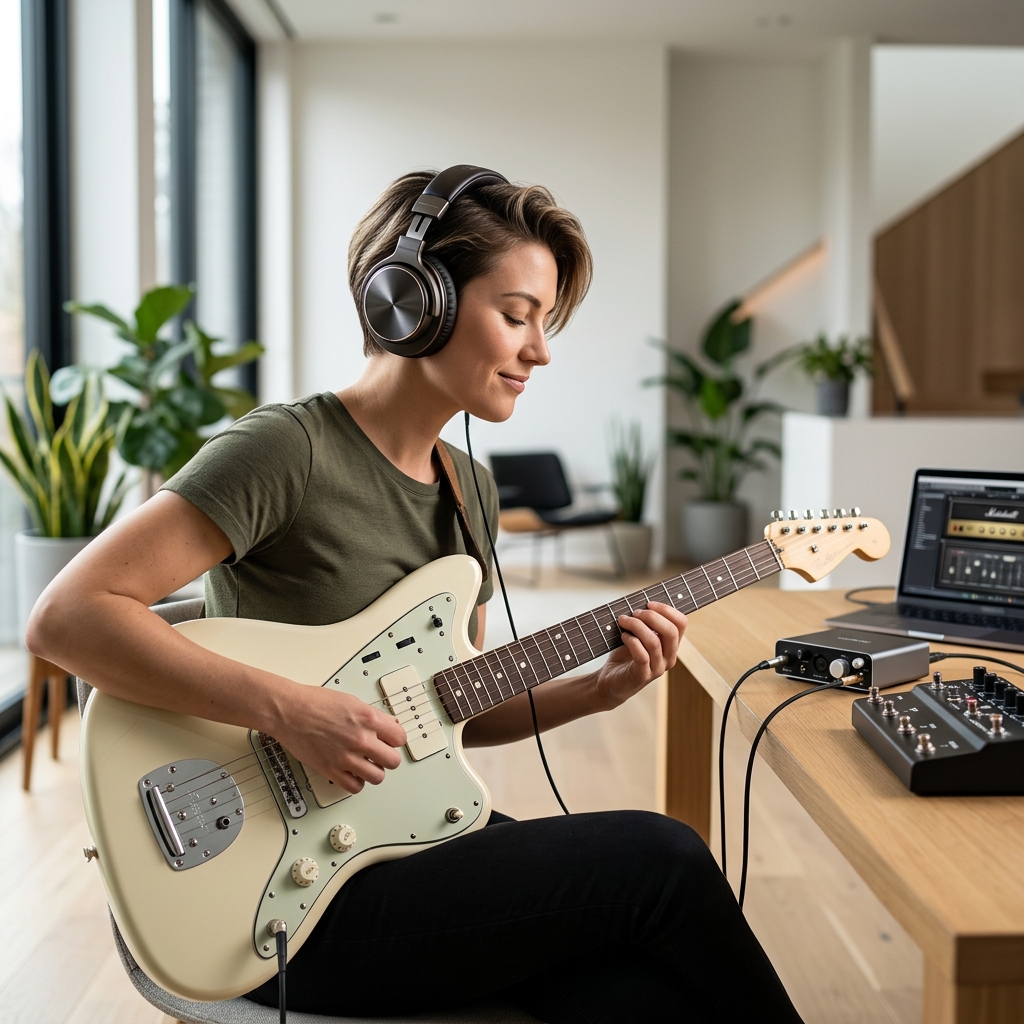
Table of Contents
Why Use Headphones with an Electric Guitar?
The benefits of using headphones with an electric guitar are numerous. Firstly, silent practice – perfect for late-night sessions or shared living spaces. Secondly, headphones allow for greater focus, blocking out external distractions and letting you concentrate on your playing. Avoiding disturbing others is a huge plus, but headphones also provide a personalised listening experience.
Beyond practice, headphones are crucial for recording directly into a computer or audio interface. They allow you to monitor your performance in real-time, ensuring a clean and accurate take. However, a key concern is latency – the delay between playing a note and hearing it through the headphones. High latency can be incredibly disruptive. Fortunately, advancements in Bluetooth codecs (like aptX Adaptive and LDAC) and dedicated audio interfaces are drastically reducing latency, but it remains a factor to consider.
Understanding Headphone Types for Guitarists
Choosing the right headphone type is as important as choosing the right model. Here’s a breakdown:
Over-Ear Headphones
- Closed-Back: Provide excellent isolation, blocking out external noise and preventing sound leakage. Ideal for recording and noisy environments.
- Open-Back: Offer a wider soundstage and a more natural listening experience, but leak sound. Best suited for quiet environments and critical listening/mixing.
On-Ear Headphones
These sit on your ears rather than around them. More portable than over-ear, but generally offer less isolation and comfort.
Earbuds/In-Ear Monitors (IEMs)
Small and convenient, IEMs are great for portability. However, they often lack the sound quality and accuracy needed for serious guitar work. Still, they’re an option for basic practice on the go.
Key Features to Look For
When selecting headphones for electric guitar, consider these specifications:
Frequency Response
A wider frequency response (e.g., 20Hz – 20kHz) allows you to hear the full spectrum of your guitar’s tone. For accurate monitoring, a flat frequency response is ideal – meaning no frequencies are artificially boosted or cut.
Impedance
Measured in Ohms (Ω). Lower impedance headphones (under 32Ω) are easier to drive with mobile devices and basic interfaces. Higher impedance headphones (over 80Ω) generally require a dedicated headphone amplifier for optimal performance.
Latency
Crucial for real-time playing. Look for Bluetooth headphones with low-latency codecs like aptX Adaptive or LDAC. Wired headphones generally have negligible latency.
Noise Cancellation (ANC)
Active Noise Cancellation (ANC) can block out distractions, but can sometimes introduce a slight delay (latency). The quality of ANC varies significantly.
Comfort
You’ll be wearing these for extended periods, so comfort is paramount. Look for padded earcups and an adjustable headband.
Build Quality
A robust build ensures your headphones will withstand the rigours of regular use.
Wired vs. Wireless
Wireless headphones offer convenience, but can introduce latency. Wired headphones provide a more reliable connection with minimal delay. If choosing wireless, pay attention to the Bluetooth codec supported.
Top Wireless Headphones for Electric Guitar (2026)
Here are some of the best wireless headphones for guitarists in 2026:
| Model | Price (GBP) | Bluetooth Codec | Latency (approx.) | Pros | Cons |
|---|---|---|---|---|---|
| Sony WH-1000XM6 | £350 | LDAC, aptX Adaptive | 30ms | Excellent noise cancellation, superb sound quality, comfortable | Can be expensive |
| Shure Aonic 5 | £300 | aptX Adaptive, LDAC | 35ms | Customizable EQ, comfortable, good battery life | Noise cancellation not as strong as Sony |
| Focal Listen Wireless | £280 | aptX | 40ms | Detailed sound, stylish design, comfortable | Limited codec support |
| Audio-Technica ATH-M50xBT2 | £200 | aptX | 45ms | Renowned sound quality, affordable, robust build | Can feel a bit tight on larger heads |
Best Noise-Cancelling Headphones for Guitar Practice (2026)
If blocking out distractions is your priority, these noise-cancelling headphones are top contenders:
| Model | Price (GBP) | ANC Effectiveness | Latency (approx.) | Pros | Cons |
|---|---|---|---|---|---|
| Sony WH-1000XM6 | £350 | Exceptional | 30ms | Industry-leading ANC, excellent sound, comfortable | Pricey |
| Shure Aonic 5 | £300 | Very Good | 35ms | Customizable ANC, comfortable, good sound quality | ANC not quite as strong as Sony |
| Bose QuietComfort Headphones (2026 Edition) | £320 | Excellent | 32ms | Renowned noise cancellation, comfortable | Sound quality not as detailed as some rivals |
Top Studio Headphones for Electric Guitar Recording (2026)
For accurate monitoring and mixing, these studio-grade headphones are ideal:
| Model | Price (GBP) | Type | Frequency Response | Pros | Cons |
|---|---|---|---|---|---|
| Beyerdynamic DT 770 Pro | £180 | Closed-Back | 5 – 35,000 Hz | Excellent isolation, detailed sound, durable | Can be a bit bass-heavy |
| Sennheiser HD 660S2 | £400 | Open-Back | 22 – 20,000 Hz | Wide soundstage, natural sound, comfortable | Leaks sound, requires a quiet environment |
| Audio-Technica ATH-M50xBT2 | £200 | Closed-Back | 15 – 28,000 Hz | Affordable, accurate sound, versatile | Less comfortable for long sessions than some |
Budget-Friendly Headphones for Electric Guitar (Under £100)
You don’t need to spend a fortune to get decent headphones. Here are some great options under £100:
- 1More Triple Driver In-Ear (£80): Surprisingly good sound quality for the price. Suitable for practice, but not ideal for recording.
- AKG K240 Studio (£70): Good value for money, relatively flat frequency response.
- Superlux HD681 (£50): Remarkably affordable, decent sound quality for the price.
How to Connect Headphones to Your Guitar Amp/Interface
Connecting headphones is straightforward:
- Amp Headphone Jack: The simplest method. Just plug your headphones into the headphone output on your amplifier.
- Audio Interface: Connect your guitar to the interface, and the interface to your headphones. This provides more control and options for recording.
- Digital Modelling Software (Positive Grid BIAS, Fender Tone Master): Connect headphones to your audio interface to monitor the processed sound from these programs.
You may need an adapter (e.g., 1/4″ to 3.5mm) depending on the headphone and output jack sizes.
Latency Troubleshooting & Tips
If you’re experiencing latency:
- Use a low-latency Bluetooth codec: aptX Adaptive or LDAC are preferable.
- Increase your audio interface’s buffer size: A smaller buffer size reduces latency but can strain your computer’s CPU.
- Close unnecessary programs: Free up system resources.
- Upgrade your audio interface: A more powerful interface can handle lower buffer sizes.
- Use a wired connection: Wired headphones eliminate Bluetooth latency altogether.
Conclusion: Choosing the Right Headphones for Your Needs
The “best” headphones depend on your specific needs. For silent practice and noise cancellation, the Sony WH-1000XM6 remains a top pick, despite the price. If you’re recording and mixing, the Beyerdynamic DT 770 Pro or Sennheiser HD 660S2 offer excellent accuracy. For budget-conscious players, the 1More Triple Driver In-Ear provides surprising value. Consider your playing environment, recording setup, and budget to make the best choice for your guitar journey.
FAQ
Q: Are open-back headphones suitable for recording guitar?
Not generally. Open-back headphones leak sound, which can be picked up by your microphone during recording. Closed-back headphones are much better for recording.
Q: What is a good impedance for guitar headphones?
For general use with a smartphone or basic interface, headphones with an impedance of 32Ω or less are ideal. For higher-quality interfaces and dedicated headphone amps, higher impedance headphones (80Ω+) can deliver better performance.
Q: Does noise cancellation affect latency?
Yes, ANC can introduce a slight delay, potentially increasing latency. The impact varies depending on the quality of the ANC implementation.
Q: Should I prioritise wired or wireless headphones for guitar?
If latency is a major concern, wired headphones are the better option. However, advancements in Bluetooth codecs are making wireless headphones increasingly viable, especially for practice and casual playing.
Q: What is aptX Adaptive and LDAC?
These are advanced Bluetooth codecs that offer lower latency and higher audio quality compared to standard SBC. They’re essential for a good wireless guitar headphone experience.