Table of Contents
Introduction: Why the Right Headphones Matter for Podcasting
In the increasingly competitive world of podcasting, audio quality is paramount. Listeners are discerning, and poor audio can quickly lead to a loss of audience. The right headphones aren’t just a ‘nice-to-have’ – they’re a vital piece of kit. They directly impact your ability to monitor your audio accurately, identify and correct issues during recording and editing, and ensure a comfortable experience during long podcasting sessions. Choosing between over-ear, on-ear, and earbuds depends on your recording environment, workflow, and personal preference. This guide will help you navigate the UK market in 2026 and find the perfect headphones for your podcasting needs.
Understanding Headphone Types for Podcasting
Over-Ear Headphones
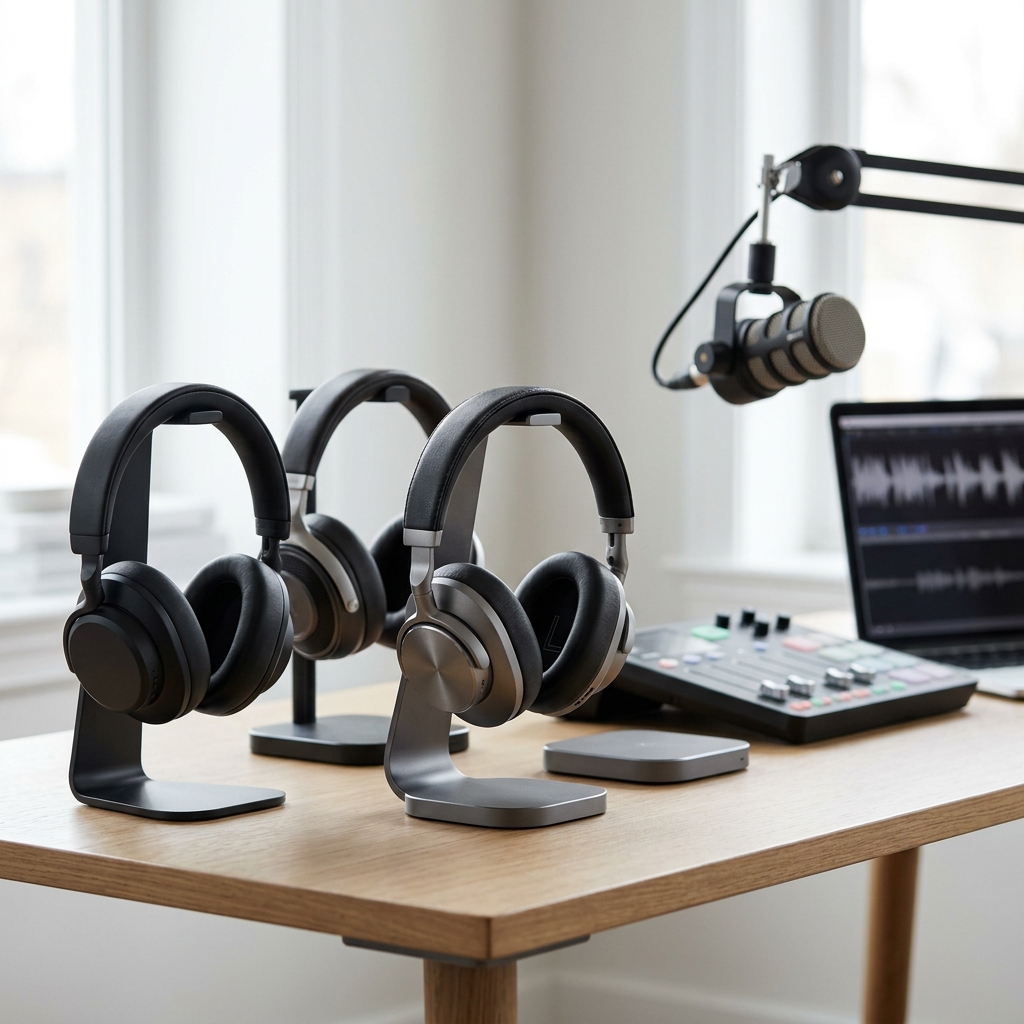
Over-ear headphones, also known as circumaural headphones, completely enclose the ear.
- Pros: Excellent sound isolation, comfortable for extended use (typically), often deliver a wider soundstage.
- Cons: Can be bulky and less portable, may get warm during long sessions.
On-Ear Headphones
On-ear headphones, or supra-aural headphones, sit on top of the ear.
- Pros: More portable than over-ear headphones, often more affordable, good for monitoring.
- Cons: Less effective noise isolation, can become uncomfortable after extended use, smaller soundstage.
Earbuds (In-Ear Monitors)
Earbuds fit directly into the ear canal.
- Pros: Extremely portable and discreet, excellent for monitoring while on the go, newer codecs offer improved audio quality.
- Cons: Can be less comfortable for some, noise isolation varies significantly, potentially less accurate sound reproduction.
For podcasting, closed-back headphones are generally preferred for recording as they minimise sound leakage, preventing your microphone from picking up the audio playing in your headphones. Open-back headphones offer a more natural soundstage but are unsuitable for recording due to bleed.
Key Features to Look for in Podcasting Headphones (2026)
- Frequency Response: A wide, flat frequency response (20Hz – 20kHz) is ideal for accurate audio monitoring.
- Impedance: Lower impedance (under 80 Ohms) is easier to drive with portable devices. Higher impedance headphones may require a headphone amplifier.
- Sensitivity: Higher sensitivity means the headphones are louder for a given input level.
- Comfort: Essential for long recording sessions. Look for plush earcups and an adjustable headband.
- Connectivity: Wired connections provide the most reliable audio quality. Wireless options offer convenience but consider latency and codec support (aptX Adaptive, LDAC).
- Noise Cancellation/Isolation: Crucial for recording in noisy environments.
- Microphone Quality: If considering headphones with a built-in microphone, check reviews for clarity and accuracy.
Top 5 Over-Ear Headphones for Podcasting (UK – 2026)
These headphones prioritise comfort, accuracy, and sound isolation.
| Headphone | Price (GBP) | Key Features | Pros | Cons |
|---|---|---|---|---|
| Sony WH-1000XM6 | £329 | Noise Cancellation, Bluetooth 5.3, LDAC codec | Exceptional noise cancellation, superb sound quality, comfortable fit. | Pricey, some features require the Sony Headphones Connect app. |
| Bose QuietComfort Ultra Headphones | £359 | World-class Noise Cancellation, Immersive Audio, CustomTune | Industry-leading noise cancellation, comfortable and lightweight, excellent audio clarity. | Expensive, bass can be slightly emphasised. |
| Audio-Technica ATH-M50xBT2 | £199 | Bluetooth 5.0, Multipoint Pairing, Extended Battery Life | Excellent value for money, accurate sound reproduction, durable build. | Less comfortable than some other options, noise isolation is good but not exceptional. |
| Beyerdynamic DT 770 Pro (80 Ohm) | £159 | Closed-Back Design, Velour Ear Pads, Robust Build | Exceptional sound detail, comfortable velour earcups, excellent build quality. | Requires a headphone amplifier for optimal performance, non-folding design. |
| Rode NTH-100 Professional Over-Ear Headphones | £149 | Closed-Back, High Isolation, Comfortable Design | Designed specifically for content creation, accurate sound, comfortable for long sessions. | Less brand recognition than Sony or Bose. |
Top 5 On-Ear Headphones for Podcasting (UK – 2026)
| Headphone | Price (GBP) | Key Features | Pros | Cons |
|---|---|---|---|---|
| Sennheiser HD 280 Pro | £99 | Closed-Back, Lightweight, Durable | Affordable, excellent sound isolation, robust build. | Comfort can be an issue for extended use, sound can be a little clinical. |
Top 5 Earbuds for Podcasting (UK – 2026)
| Headphone | Price (GBP) | Key Features | Pros | Cons |
|---|---|---|---|---|
| Shure Aonic 215 True Wireless Sound Isolating Earbuds | £199 | Sound Isolating Design, Wireless Charging, Customisable EQ | Excellent sound isolation, comfortable fit, customisable sound profile. | Battery life is average, can be expensive compared to other earbuds. |
| Apple AirPods Pro 2nd Generation | £249 | Active Noise Cancellation, Transparency Mode, Spatial Audio | Excellent noise cancellation, seamless integration with Apple devices, improved sound quality. | Expensive, best features are Apple-specific. |
| Technics EAH-AZ80 | £249 | LDAC Support, Multipoint Connection, Comfortable Fit | High-resolution audio with LDAC, comfortable and secure fit, excellent call quality. | Can be expensive, some features are software-dependent. |
| 1More Evo | £139 | LDAC, ANC, Wireless Charging | Great value for money, good noise cancellation, detailed sound. | Build quality is not as premium as more expensive options. |
Wired vs. Wireless Headphones: Which is Best for Podcasting?
Wired headphones offer the most reliable audio quality and eliminate the risk of latency or connection drops. This is crucial for accurate monitoring during recording and editing. However, they can restrict movement. Wireless headphones provide convenience and freedom of movement, but you need to consider latency. Modern codecs like aptX Adaptive and LDAC significantly reduce latency and deliver near-wired audio quality, making them viable for many podcasting workflows. For critical recording, wired is usually preferred. For casual monitoring or editing, wireless can be a good option.
Headphones with Built-in Microphones: A Convenient Option?
While convenient, the built-in microphones in most headphones aren’t typically of sufficient quality for professional podcasting. They often lack the clarity and detail of a dedicated microphone. However, for quick notes, rough drafts, or remote interviews where audio quality isn’t critical, they can be a useful option. If you are heavily reliant on the mic, it’s worth investing in a separate USB microphone.
Budget Considerations: Headphones for Every Podcaster
- Under £50: Sennheiser HD 280 Pro is a good starting point.
- £50 – £150: Audio-Technica ATH-M50xBT2, Rode NTH-100 offer great value.
- £150 – £300: Beyerdynamic DT 770 Pro, Shure Aonic 215 provide excellent performance.
- £300+: Sony WH-1000XM6, Bose QuietComfort Ultra Headphones are top-of-the-line options.
Caring for Your Podcasting Headphones: Longevity and Maintenance
To extend the lifespan of your headphones:
- Clean them regularly with a soft, dry cloth.
- Store them in a case when not in use.
- Avoid exposing them to extreme temperatures or humidity.
- Check the warranty information for your specific model. Most manufacturers offer a 1-2 year warranty.
Conclusion: Choosing the Right Headphones for Your Podcast
The best headphones for podcasting depend on your individual needs and budget. If you prioritise sound isolation and comfort for long recording sessions, over-ear headphones like the Sony WH-1000XM6 or Bose QuietComfort Ultra Headphones are excellent choices. For portability and affordability, the Audio-Technica ATH-M50xBT2 or Sennheiser HD 280 Pro are worthy contenders. Ultimately, investing in a quality pair of headphones will significantly improve your podcast’s audio quality and enhance your overall podcasting experience.
FAQ
1. Do I *need* noise-cancelling headphones for podcasting?
Not necessarily, but they are highly recommended, especially if you record in a noisy environment. Noise cancellation helps you monitor your audio more accurately and prevents unwanted sounds from being picked up by your microphone.
2. Is Bluetooth latency a problem for podcasting?
Latency *can* be a problem, especially during recording. Modern Bluetooth codecs (aptX Adaptive, LDAC) have significantly reduced latency, but wired headphones still offer the most reliable performance.
3. Are open-back headphones suitable for podcasting?
Generally no. Open-back headphones allow sound to leak, which can be picked up by your microphone during recording. Closed-back headphones are preferred for their sound isolation.
4. What impedance should I look for?
Lower impedance (under 80 Ohms) is typically best for most podcasting setups, as it’s easier to drive with standard audio interfaces and devices. Higher impedance headphones may require a dedicated headphone amplifier.
5. How important is frequency response?
A flat and wide frequency response is important for accurate audio monitoring. It allows you to hear all the nuances of your voice and identify any potential issues with your recording.