
Table of Contents
As an Amazon Associate, we earn from qualifying purchases. This means we may receive a small commission at no extra cost to you when you buy through links on this page.
Introduction: Why Over-Ear Headphones are Ideal for Travel
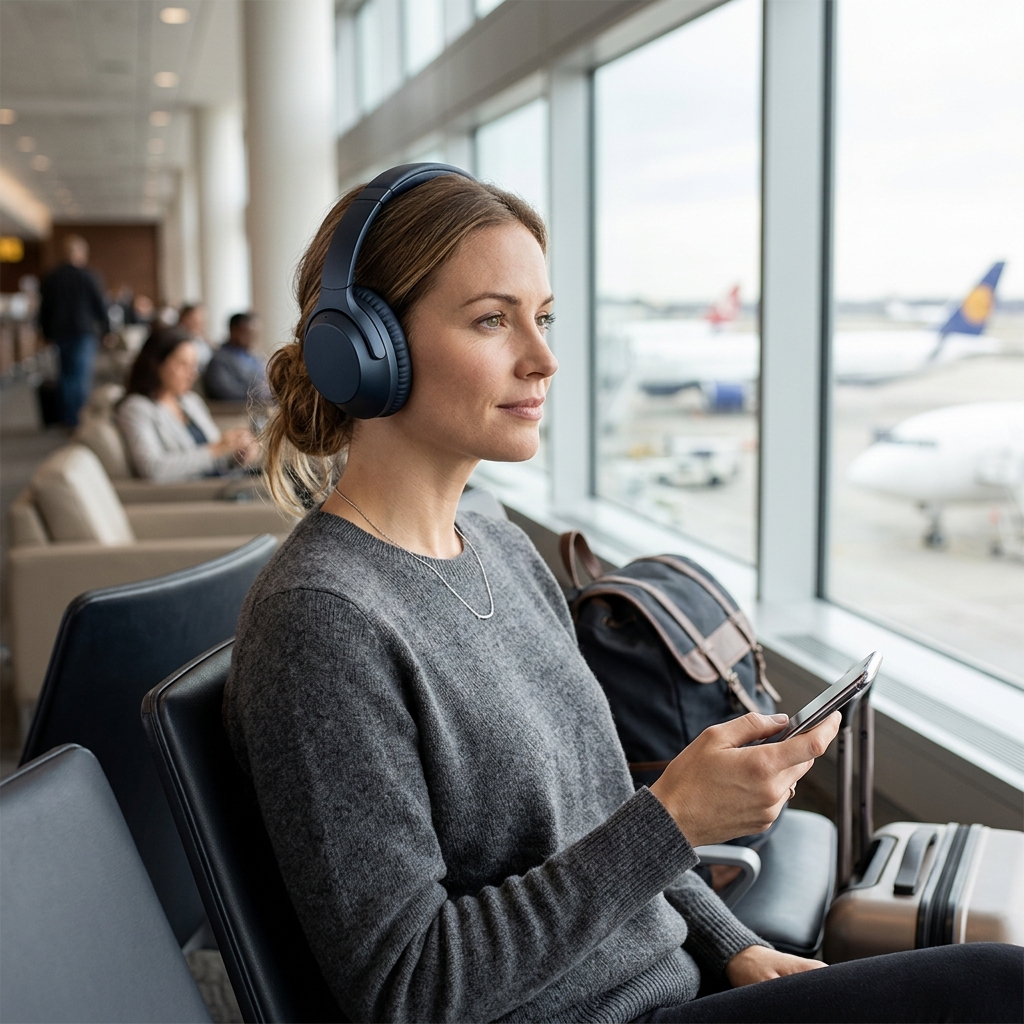
In 2026, travel is more connected than ever. Whether you’re working remotely from a train, enjoying the latest in-flight entertainment, or simply seeking a peaceful escape from the hustle of the airport, the right headphones can make all the difference. Over-ear headphones excel in this environment, offering superior noise cancellation to drown out engine rumble and chatty passengers, unparalleled comfort for long journeys, and a richer, more immersive audio experience compared to earbuds. The increasing reliance on digital entertainment and remote work while travelling makes a quality pair of headphones an essential travel companion. This guide will navigate you through the best options available in the UK market this year.
Key Features to Consider When Choosing Travel Headphones (2026)
Selecting the perfect travel headphones requires careful consideration of several key features. Here’s a breakdown of what to look for in 2026:
Noise Cancellation (ANC)
Noise cancellation technology has advanced significantly. Expect to see ‘Adaptive ANC’ become standard, automatically adjusting to the surrounding environment for optimal performance. ‘Personalised ANC’ learns your ear shape and listening preferences for a tailored noise-cancelling experience. Look for headphones that effectively block out a wide range of frequencies – from low-frequency engine noise to higher-pitched chatter.
Comfort
Long-haul flights demand comfort. Prioritise headphones with plush earcups (memory foam is ideal) and an adjustable, well-padded headband. Weight is also crucial; lighter headphones will be more comfortable during extended wear.
Battery Life & Quick Charge
A minimum of 30 hours of battery life is recommended for travel. ‘Fast Charging’ capabilities are now essential – a 10-minute charge should provide several hours of playback. Some models even offer solar charging as a sustainable option.
Portability
Folding designs are a must for compact storage. A robust carrying case is also vital to protect your investment during transit.
Bluetooth Connectivity
Bluetooth 5.3 (or higher) provides a stable connection and improved audio quality. Look for support for advanced codecs like aptX Adaptive or LDAC for high-resolution audio streaming. ‘Multi-device pairing’ allows you to seamlessly switch between your phone, tablet, and laptop.
Sound Quality
While noise cancellation is paramount, don’t compromise on sound quality. Consider headphones with a balanced sound signature that accurately reproduces music across all frequencies. Features like spatial audio (for a more immersive experience) are becoming increasingly popular.
Top 5 Over-Ear Headphones for Travel in 2026: Our Picks
1. Sony WH-1000XM6 (Successor Model) – £350
Sony continues to dominate the noise-cancellation arena. The WH-1000XM6 delivers exceptional ANC, improved call quality, and a refined design. The personalised ANC feature adapts remarkably well to different environments.
- Pros: Industry-leading noise cancellation, excellent sound quality, comfortable design, long battery life (40 hours).
- Cons: Pricey, some may find the touch controls overly sensitive.
- Best for: Long-haul flights, noisy commutes, anyone prioritising silence.
2. Bose QuietComfort Ultra Headphones (Successor Model) – £380
Bose is renowned for its comfort and effective noise cancellation. The QuietComfort Ultra Headphones provide a supremely comfortable fit and a powerful noise-cancelling experience. Features immersive spatial audio.
- Pros: Exceptional comfort, powerful noise cancellation, immersive spatial audio, clear call quality.
- Cons: Expensive, design is somewhat understated.
- Best for: Those who value comfort above all else, frequent flyers, audio purists.
3. Sennheiser Momentum 4 Wireless (Successor Model) – £320
Sennheiser’s Momentum 4 Wireless offers a superb balance of sound quality, comfort, and noise cancellation. Adaptive noise cancellation is excellent, and the sound signature is detailed and engaging.
- Pros: Excellent sound quality, effective noise cancellation, comfortable design, stylish appearance.
- Cons: Slightly less intuitive controls than Sony or Bose.
- Best for: Music lovers, travellers who want a sophisticated look and sound.
4. Apple AirPods Max (2nd Generation) – £550
Designed for Apple device users, the AirPods Max 2nd Generation boasts seamless integration, spatial audio with dynamic head tracking, and impressive noise cancellation. The computational audio capabilities are class-leading.
- Pros: Seamless Apple integration, exceptional spatial audio, premium build quality, effective noise cancellation.
- Cons: Very expensive, limited compatibility with non-Apple devices.
- Best for: Apple ecosystem users, those seeking a premium audio experience.
5. Technics EAH-A800 – £300
Technics delivers a well-rounded package with the EAH-A800. Good noise cancellation, comfortable design and solid sound quality make this a strong contender.
- Pros: Good value for money, comfortable, decent noise cancelling, good sound quality.
- Cons: Not quite as good as the premium options in terms of ANC.
- Best for: Travellers who want a good all-rounder at a reasonable price.
Budget-Friendly Over-Ear Headphones for Travel (Under £150)
Skullcandy Hesh ANC – £80
The Skullcandy Hesh ANC provides surprisingly good noise cancellation and a comfortable fit for the price. Battery life is respectable, and the design is stylish. A great option for budget-conscious travellers.
- Pros: Affordable, good noise cancellation for the price, comfortable, stylish design.
- Cons: Sound quality isn’t as refined as premium models, build quality is less robust.
Anker Soundcore Space Q45 – £120
Anker consistently delivers value for money. The Space Q45 offers impressive noise cancellation, long battery life, and a comfortable fit, all at a very competitive price. It’s a fantastic choice for travellers on a budget.
- Pros: Excellent value for money, strong noise cancellation, long battery life, comfortable.
- Cons: Sound quality is good but not exceptional, build quality could be better.
Premium Over-Ear Headphones for the Discerning Traveller (£200+)
For frequent travellers who demand the best, investing in a premium pair of headphones is worthwhile. These models offer superior noise cancellation, sound quality, and comfort, as well as advanced features like spatial audio and personalised sound profiles.
(See models listed in Top 5 section – Sony, Bose, Sennheiser, Apple)
Travel Headphones with Advanced Features (2026 Tech)
2026 sees a rise in headphones with integrated technology. Some models now feature:
- Integrated Language Translation: Real-time translation of spoken language directly into your headphones.
- Biometric Sensors: Monitor stress levels during travel (using heart rate variability) and suggest relaxation techniques.
- Advanced Voice Assistant Integration: More sophisticated voice control, including flight booking and itinerary management.
Caring for Your Travel Headphones: Tips for Longevity
- Cleaning: Regularly wipe down your headphones with a soft, dry cloth.
- Storage: Always store your headphones in the provided carrying case when not in use.
- Temperature: Avoid exposing your headphones to extreme temperatures (both hot and cold).
- Battery Health: Avoid fully discharging the battery frequently.
Conclusion: Finding the Perfect Travel Companion
Choosing the best over-ear headphones for travel depends on your individual needs and budget. If you prioritise noise cancellation and comfort above all else, the Bose QuietComfort Ultra Headphones are an excellent choice. For the best overall package, the Sony WH-1000XM6 remains a top contender. If you’re on a budget, the Anker Soundcore Space Q45 offers incredible value. Consider the features most important to *you* – whether it’s battery life, portability, sound quality, or the latest technological advancements – and choose accordingly. Happy travels!
FAQ
Q: Are noise-cancelling headphones safe for my ears?
Yes, modern noise-cancelling headphones are generally safe. They don’t actively pump sound *into* your ear canal; they use microphones and algorithms to reduce ambient noise. However, it’s always advisable to listen at a moderate volume.
Q: Can I use over-ear headphones on an airplane?
Absolutely! Over-ear headphones are ideal for airplane travel. Their noise cancellation effectively blocks out engine noise, and their comfort makes long flights more enjoyable.
Q: What’s the difference between active and passive noise cancellation?
Passive noise cancellation relies on the physical design of the headphones to block out sound (like earcups sealing around your ears). Active noise cancellation (ANC) uses microphones and electronic circuitry to actively reduce ambient noise.
Q: How important is Bluetooth codec support?
Codec support impacts audio quality. aptX Adaptive and LDAC offer higher-resolution audio streaming compared to the standard SBC codec. If you prioritize sound quality and your source device supports these codecs, it’s worth considering.
Q: Should I worry about headphone impedance when travelling?
Not usually. Most modern headphones have relatively low impedance, meaning they’ll work well with smartphones, tablets, and laptops. Higher impedance headphones may require a dedicated headphone amplifier for optimal performance, but these are less common for travel.